Insurance

The estimate was honest. The photo was not.

First notice of loss is a photograph. Proof of loss is a document. Both are now trivially generative, and both arrive in your claims system as attachments no adjuster can forensically evaluate at line speed. TruthScan scores them before reserve is set.

Seconds End-to-end verdict
2 APIs Image and PDF, purpose-built
Heatmaps Evidence for every decision
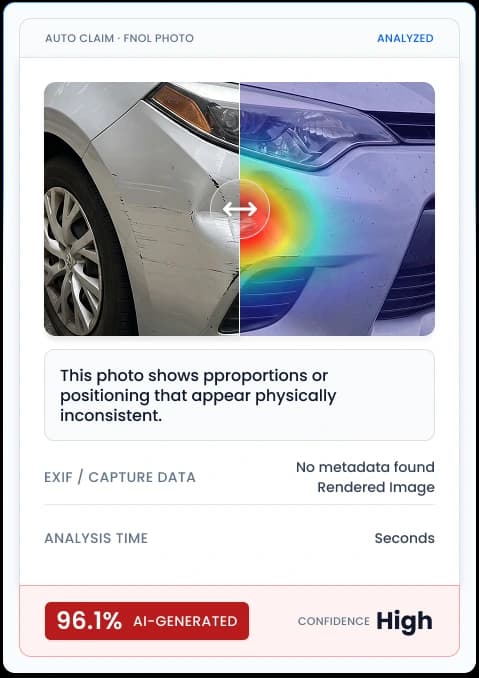
Auto claim FNOL photo analyzed for AI generation

THE THREAT

Insurance fraud used to require a hammer. Now it requires a prompt.

The staged-accident economy was always limited by physics — someone had to actually dent the car, actually flood the basement, actually lose the laptop. Generative editing removes the physical act entirely: the claimant photographs an undamaged vehicle and asks a model to add the damage. The result is the real car, the real plate, the real driveway, with a dent that never existed. It is the hardest class of image fraud to catch by eye, and it is the most common one we see.

In seconds

End-to-end verdict, fast enough to sit inside straight-through processing rather than beside it.

In-paint

Localized manipulation detection — the specific failure mode of a real photo with fabricated damage added.

Heatmaps

Region-level evidence an adjuster can attach to a denial and an SIU referral can build on.

ATTACK PATTERNS

Four attack patterns in claims evidence

Written the way an SIU investigator would describe them, because that is who will read this page.

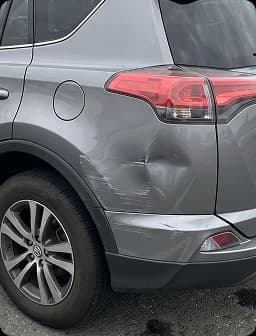
In-painted vehicle damage on an authentic claim photo

"Add a dent" — the in-painted vehicle

The claimant takes a photo of their undamaged bumper and edits it to show collision damage. The rest of the image is authentic, including the plate and timestamp. Metadata checks pass, and reverse-image search finds nothing.

WHY THE USUAL CHECKS FAIL

EXIF is intact. The device is real. The location is real. Only a 300×200 pixel region of the image is a lie.
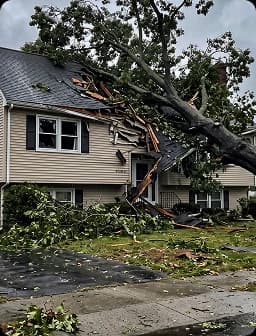

Property damage photo after a catastrophe event

The catastrophe-event property claim

After a storm, claim volume spikes and processing thresholds relax to maintain service. This is when roof, water, and wind-damage photos flood in from claimants whose property was in the storm's path but undamaged.

THE OPERATIONAL TRAP

The surge that makes fast payment a service commitment is the surge that makes fabricated evidence profitable.

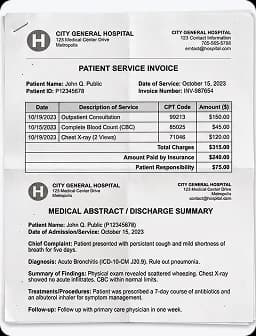
Fabricated repair invoice and proof of loss document

The fabricated repair invoice and proof of ownership

Proof of loss value is a document issue. Repair quotes and invoices are now generated end-to-end, ensuring consistency and accuracy.

WHAT SURVIVES A FORMAT CHECK

A regenerated invoice has no tampering to find. The line items add up. The vendor exists. The job never happened.

Synthetic medical bill used in a health or life claim

The synthetic medical bill in a health or life claim

Fabricated medical invoices, treatment summaries and lab documentation submitted in support of health, life and disability claims — structurally valid, correctly coded, and describing care that was never delivered.

CROSS-REFERENCE

See also: Healthcare & Digital Health, where the same document class is attacked from the provider side.

RECEIPT DETECTION MODULE

Receipts and invoices are how a claim gets its number

The photo establishes that a loss occurred. The receipt establishes what it was worth — which is why inflating a claim is a document problem, not an image problem. Contents claims, repair reimbursements and proof-of-ownership documents all run through the same PDF detection engine.

See the Fake Receipt Detector

$16.8M

in fraudulent receipts caught by one enterprise customer in a single 30-day period, surfaced by batch-scanning receipts that had already cleared human review.

ONE ENTERPRISE CUSTOMER · 30-DAY PERIOD · FIGURE PENDING INTERNAL VERIFICATION BEFORE PUBLISH

THE ENGINES

Two detection engines. Two purpose-built APIs. One platform.

Photos and documents are different forensic problems, so we solve them with different models behind two dedicated APIs. You call the one that matches the artifact — and you review both in one dashboard, under one contract, through one vendor review.

IMAGE DETECTION API

Scores the loss evidence

Built for the failure mode that matters most in claims: not the fully generated image, but the authentic photo with fabricated damage added.

  • Localized in-painting and manipulation detection with region heatmaps
  • Full-frame generative detection across current diffusion models
  • Capture-provenance analysis: EXIF, device fingerprint, compression history
  • Consistent scoring across every claim, which is what a non-discriminatory denial policy requires

PDF DETECTION API

Scores the proof of loss

Forensics for the documents that set the claim's value: invoices, estimates, receipts, medical bills and ownership records.

  • Detects fully regenerated documents, not only edited ones
  • Template-reuse matching across your own claims history
  • Object-layer and font forensics beneath the OCR text
  • Batch mode for retroactive audit of claims already paid
They are separate APIs, called separately. A single fraudulent submission usually carries both a photo and a document, so most teams call both and merge the verdicts in their own decision layer. End to end, the whole process takes one to two seconds.

WHERE IT SITS

Between FNOL and reserve

The earliest useful place to score evidence is before a number is attached to it. Detection runs as a step in intake, not as an audit after the fact.

STEP 01

FNOL received

Claimant uploads photos and, for proof of loss, supporting documents.

STEP 02

Evidence scored

Image API on the photos, PDF API on the documents. One to two seconds, end to end.

STEP 03

Routed by your rules

Straight-through processing for clean claims; SIU referral, with evidence, for flagged ones.

STEP 04

Retained for the file

Heatmap, forensic report and model version attach to the claim record for appeal, litigation or regulator review.

DEFENSIBILITY

Evidence an SIU referral can be built on

A confidence score is not a finding. What an insurer needs is an artifact that survives an appeal, a DOI complaint and, eventually, a courtroom.

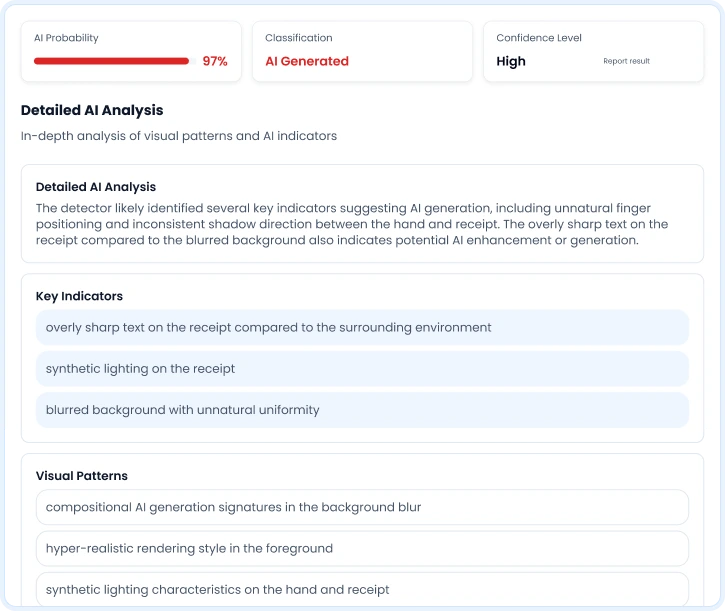
Detailed AI analysis report for an SIU referral
  • Region-level heatmaps. The report shows where the image failed, which is the difference between an allegation and an exhibit.

  • Uniform thresholds across every claimant. The same model at the same threshold on every claim — the substance of a fair-claims-practice defense.

  • Retained model provenance. Version and timestamp are stored with the verdict, so a finding can be reproduced and explained years later.

  • Retroactive batch audit. Run detection across claims you already paid. This is where the number in the receipt module came from.

COMPLIANCE & DEPLOYMENT

Built for a regulated claims environment

AICPA SOC certification seal

SOC 2 Type II

Audited controls

Independently audited security, availability, and confidentiality controls, renewed annually.

ISO 27001 certification seal

ISO 27001

Certified ISMS

Certified information security management across the full platform and API surface.

GDPR compliance seal

GDPR

Privacy-first processing

DPA available. Enterprise customers can pin processing to the EU.

Regional or on-site deployments seal

Global Infrastructure

Regional & On-site

UK, EU and on-premise deployments for Enterprise.

TECHNOLOGY FEATURED IN

Forbes logo
Business Insider logo
Nature logo
CBS News logo
Yahoo logo
BuzzFeed logo

Forensic Grade AI Fraud Prevention

Get full forensic reports - heat maps, key indicators, and detailed descriptions.

Free

$0/month

Try the full engine

  • 25 results/month (images + PDF pages)
  • Detailed indicators on every result
  • Full API access
  • Detection history in dashboard
  • Free forever — no trial period

Starter

$24/month

$0.03 / result - $290/yr

For individuals and small teams

  • 1,000 results/month included
  • $0.03 per additional result
  • CSV export of result history
  • Batch uploads
  • Audit-ready detection reports
  • Standard support
MOST POPULAR

Professional

$83/month

$0.02 / result - $990/yr

For teams in production

  • 5,000 results/month included
  • $0.02 per additional result
  • Priority processing queue
  • Higher API rate limits

Business

$333/month

$0.01 / result - $3,990/yr

For high-volume operations

  • 40,000 results/month included
  • $0.01 per additional result
  • Zero Data Retention (ZDR)
  • Highest self-serve rate limits
  • Priority support

Enterprise

Customize a Plan For Your Needs

$0.005 or less per result

Contact Sales
  • Discounts scale with volume
  • Custom SLAs with service credits
  • Zero Data Retention (ZDR)
  • Custom integrations
  • Custom MSA and DPA
  • Dedicated throughput
  • Named 24/7 account team
  • Dedicated / on-prem deployment

No hard quota walls — usage is simply metered at your plan's rate. Custom contracts, SLAs, DPAs, and hosting environments are available exclusively on Enterprise. All plans include SOC 2 Type II compliance.

FAQ

What claims and SIU teams ask us first

Scan the claims you already paid.

Send us a sample from a closed period. We will run both engines across it and show you what cleared review — with region-level heatmaps on every finding.

NO CARD REQUIRED · UNLIMITED SEATS ON EVERY PLAN · SOC 2 TYPE II · ISO 27001 · GDPR