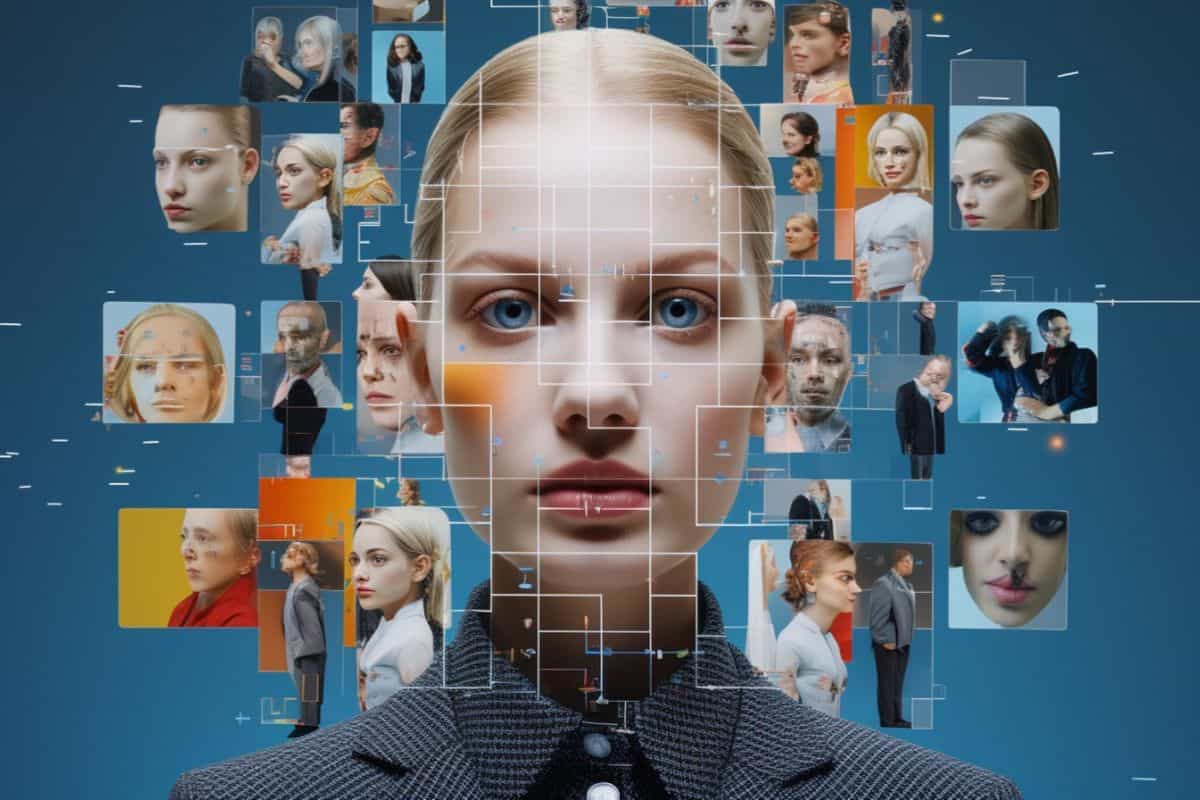
You probably landed here because the phrase “synthetic media” showed up somewhere it now has to be acted on. Maybe it was a board question, a line in a vendor proposal or a clause your legal team flagged in the EU AI Act.
The trouble is that everyone uses the term a little differently. Marketing hears AI avatars, fraud hears fake IDs and security hears a cloned CEO on a video call, so the same word ends up meaning three separate budgets.
Pinning down the definition first saves a lot of arguing later, because what you call it decides which team owns it and which rules apply to it.
Key Takeaways
- Synthetic media includes AI-generated or altered images, videos, audio, documents, and text, while deepfakes specifically imitate real people or events.
- Enterprises face synthetic media risks across finance, KYC, insurance, HR, and communications, including payment fraud, fake identities, false claims, and reputational damage.
- Human review alone is unreliable, making automated detection and layered verification essential for identifying sophisticated fakes and subtle AI edits.
- Provenance tools track a file’s origin and editing history, while AI detection helps assess external content that lacks trustworthy credentials.
- TruthScan helps businesses detect synthetic content across multiple formats, using confidence scores, explanations, and heatmaps to identify suspicious media before it triggers costly decisions.
Synthetic Media, Defined in One Sentence
Synthetic media is any image, video, audio clip, document or piece of text that AI created or substantially changed, so that it looks or sounds like something a person recorded, photographed or wrote.
The Partnership on AI uses a similar framing in its Responsible Practices for Synthetic Media, which launched in February 2023 with Adobe, the BBC, OpenAI and TikTok among its early backers. It describes synthetic media as audiovisual content that AI often generates or modifies.
Regulators in finance draw the line in the same place. In its November 2024 alert, FinCEN describes deepfakes as synthetic content that uses AI or machine learning to produce realistic but inauthentic video, pictures, audio and text.


Never Worry About AI Fraud Again. TruthScan Can Help You:
- Detect AI generated images, text, voice, and video.
- Avoid major AI driven fraud.
- Protect your most sensitive enterprise assets.
| Term | What it covers | Everyday example |
|---|---|---|
| Synthetic media | Any content that AI generated or substantially altered | An AI presenter in a training video |
| Deepfake | Synthetic media that imitates a real person or a real event | A cloned voice of your CFO asking for a payment |
| AI-generated content | Content created from a prompt with no real source file | A product photo for an item that was never photographed |
| AI-edited content | A real file with part of it changed by AI | A genuine jacket photo with a stain added |
| Cheapfake | Manipulation done with ordinary editing tools and no AI | A real clip slowed down to make a speaker sound drunk |
| Synthetic identity | A fake person assembled from real and invented data, often with AI images | A new account opened with a generated selfie and a forged ID |
The Main Types of Synthetic Media
Each type gets made differently and shows up in different parts of a company. The last column is where most teams underestimate the work, since the hardest fakes to catch are rarely the fully generated ones.
| Type | How it’s made | Where companies run into it | Why it’s hard to catch |
|---|---|---|---|
| Face swap | A real person’s face mapped onto someone else’s video, live or recorded | Video KYC, job interviews, executive calls | The body, room and lighting are real |
| Lip-sync and reenactment | A real video with mouth movement redrawn to match new audio | Fake statements from executives or politicians | Only a small region of each frame changes |
| Fully generated video | Text or image prompts into models such as Sora 2, Veo 3 or Kling AI | Insurance claims, misinformation, scam ads | Quality jumps with each model release |
| Voice clone | A short recording of a real person used to train a speech model | Call centers, wire approvals, voicemail | Phone audio already hides most artifacts |
| Generated image | A prompt into an image model | Profile photos, marketplace listings, ID selfies | No camera, so no camera traces to check |
| AI edit on a real photo | A real photo with one detail added or removed by AI | Refund claims, damage claims, expense receipts | Almost every pixel is still the real photo |
| Synthetic document | AI-made or AI-edited PDFs, receipts and statements | Lending, expense reports, onboarding | Passes OCR and format checks cleanly |
| Synthetic text | Large language model output | Applications, reviews, phishing emails | Humans write in similar styles |
AI edits deserve extra attention. A single added scratch touches a tiny share of the frame, which is why detectors trained only on fully generated images tend to miss them.
Not Every Synthetic File Is a Threat
Plenty of synthetic media is ordinary business. Companies use AI presenters for training videos, dub ads into other languages and generate product shots for catalogs, and none of that is fraud when it’s disclosed and consented to.
Europe now writes that expectation into law. Since 2 August 2026, Article 50 of the EU AI Act requires anyone who publishes a deepfake to disclose that it was artificially generated or manipulated, with a lighter rule for clearly artistic or satirical work, as Cooley’s summary explains.
The European Commission reads that duty broadly, so content posted on the open internet can fall under it even if it doesn’t target the EU. Our guide to the EU AI Act covers the wider compliance picture.
So the useful question for a risk team is about intent and disclosure. Synthetic media becomes your problem when someone uses it to make you or your customers believe something false and then act on it.
Where Synthetic Media Hits an Enterprise
The money at stake is large. Deloitte projects that generative AI could push US fraud losses from $12.3 billion in 2023 to $40 billion by 2027, a compound annual growth rate of 32%.
| Team | What shows up | What it costs when it works | First control to add |
|---|---|---|---|
| Finance and treasury | Cloned executive voices and video calls | Released wires that rarely come back | No payment approval on voice or video alone |
| KYC and onboarding | Generated selfies, face swaps, forged IDs | Mule accounts and synthetic identities | Automated scoring of every ID image and selfie |
| Claims and refunds | AI-edited damage photos and fake receipts | False payouts at scale | Scan images before any payout decision |
| HR and recruiting | AI-written resumes and face-swapped interviews | Insider access for someone who isn’t who they say | Identity check before system access is granted |
| Brand and comms | Fake endorsements and fake statements from leaders | Customer losses and reputation damage | Monitoring plus a takedown process |
| Legal and compliance | Altered evidence and disputed recordings | Wrong decisions in disputes and investigations | Authenticity check on any media used as evidence |
FinCEN has seen this move into banking specifically, noting an increase in suspicious activity reports that describe deepfake media since 2023. Recruiters face a version of it too, which we cover in our piece on AI-generated resumes.
Why People Can’t Be the Control
Training staff helps, but it can’t carry the load alone. In a 2025 iProov study of 2,000 UK and US consumers who were told to look for fakes, just 0.1% correctly sorted every real and fake image and video.
Video was the harder format, with participants 36% less likely to spot a synthetic clip than a synthetic image. More than 60% still felt confident in their answers, which is the gap fraudsters rely on.
Our own research points the same way. In the study we covered on human image review, 500 people failed to identify AI images most of the time.

Provenance and Detection Solve Different Halves of the Problem
You’ll hear two approaches pitched as the fix. Provenance records where a file came from, while detection examines the file itself for signs of generation or editing.
The C2PA standard behind Content Credentials attaches a signed record of origin and edits to a file. It’s valuable for content you publish, though apps such as WhatsApp re-encode uploads and strip that record, and most files arrive with no credentials at all.
| Approach | What it tells you | Where it breaks | Best use |
|---|---|---|---|
| Content Credentials (C2PA) | Who signed the file and what edits were recorded | Stripped by re-encoding, and absent on most media | Proving your own published content is genuine |
| Invisible watermarks | That a cooperating AI tool made the file | Only covers tools that add them | Labeling output from your own AI tools |
| AI detection | How likely the content was generated or edited | Returns a probability that needs thresholds | Screening media you didn’t create |
| Human review | Context, intent and common sense | Poor at spotting modern fakes, slow at volume | Final judgment on flagged items |
For files coming in from customers, candidates or strangers, detection is the layer that works, because you can’t expect a fraudster to sign their forgery.
A Five-Question Synthetic Media Risk Check
You can run this in a single meeting with fraud, security and operations leads. Score each answer low, medium or high, and the highs become your first projects.
- Where does outside media enter the business, such as uploads, email attachments, calls and meeting links?
- Which of those inputs can trigger a payment, an account opening or a system access change?
- Can anyone approve that action based on a voice or a video alone?
- If a file turns out to be fake, do you still have the original and a record of who approved what?
- Which rules apply to you, such as the EU AI Act, FinCEN reporting or sector privacy laws?
How We Help Teams Tell Real From Synthetic
We built TruthScan to cover the full set of formats in one place, so one integration handles text, images, audio, video and documents. Our AI Image Detector and PDF forgery checks share the same API as our voice and video models.
Our video models recognize output from hundreds of generators, from Sora 2, Veo 3 and Kling AI to HeyGen and Runway Gen-4. Every result includes a confidence score, an explanation and a heatmap showing which part of the file looks synthetic.
The Proof: Catching Small AI Edits on Allegro
Sentinel protects sellers on Allegro, one of Europe’s largest marketplaces, where scammers use AI to add fake stains and scratches to real product photos and then claim refunds. Its founder, Piotr Szmielew, tested other tools before choosing us.
In Sentinel’s testing, OpenAI’s vision model flagged a real photo as fake and Hive never answered repeated emails. Sightengine handled fully generated images at a reasonable cost, which is real credit, but it couldn’t catch AI edits on real photos.
Sentinel now runs TruthScan as the final judge in its pipeline. We power about 90% of its AI-edit detection, with a false positive rate under 1% and only one inconclusive result across its whole test set, as the Sentinel case study details.
When Szmielew asked for a new feature, it shipped 14 days later. Sentinel was later accepted into the Google Cloud for Startups program, and the TruthScan integration was one of the factors in that acceptance.
When We’re Not the Right Fit
If your main goal is labeling the AI content your own marketing team produces under Article 50, start with provenance and watermarking inside your creation tools. Detection earns its place on content you didn’t make yourself.
A detection score also isn’t a courtroom verdict. If a case is headed to trial, you’ll still want a qualified forensic expert, and our heatmaps and reports give that expert a strong place to start.
Frequently Asked Questions
What is synthetic media in simple terms?
It’s content that AI made or changed so it looks or sounds real, including images, video, voices, documents and text. We at TruthScan treat deepfakes as the subset that imitates real people or real events.
Is synthetic media the same as a deepfake?
Every deepfake is synthetic media, while a lot of synthetic media isn’t a deepfake. An AI-generated mountain photo is synthetic, and a cloned voice of a named executive is a deepfake.
Is synthetic media illegal?
Creating it is generally legal. Using it to defraud, impersonate or harass people is illegal in most places, and the EU now requires disclosure when deepfakes are published.
Can synthetic media be detected reliably?
Detection tools trained on many generators catch far more than people do, and they return probabilities you set thresholds for. Pair them with human review for borderline results and keep the original file for evidence.
Which industries face the most risk?
Banking, insurance, marketplaces and any company that onboards customers remotely face the most direct financial exposure. Media companies and public figures face the highest reputational risk.
Start With the Inputs That Move Money
You don’t need to scan everything on day one. Pick the two or three places where an outside file can trigger a payout, an account or an approval, and put automated checks there first.
If you’d like to see how that looks on your own files, talk with us about a pilot.