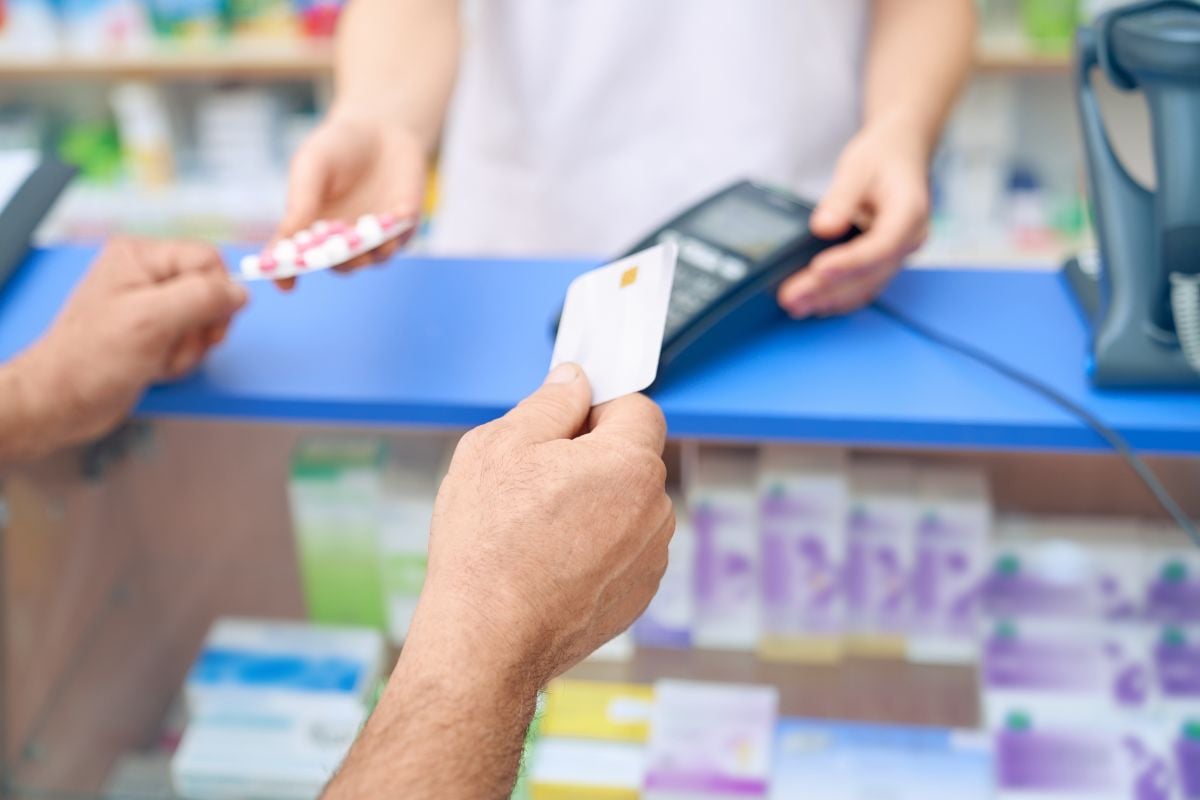
Pharmacy receipt fraud is at an all-time high because it thrives on volume and trust. Most claims sail through approval because manually scrutinizing every submission is exhausting and slow.
That’s exactly what fraudsters count on.
Although a single fake pharmacy receipt for a $47 allergy medication looks harmless, when you multiply that across hundreds of fake pharmacy receipt claims each month, your organization faces a serious financial drain.
It’s already a demanding task to keep track of transactions and refund claims, so you can’t sit on the sidelines and watch all this happen.
That’s why this guide will give you the needed solution for reimbursement fraud prevention.
Hal-hal Penting yang Dapat Dipetik
- Pharmacy receipt fraud is surging as scammers use accessible AI generators to create hyper-realistic forgeries that exploit rising drug costs and high-volume reimbursement cycles.
- Fraudsters often use “micro-fraud” tactics, submitting multiple small claims that fly under manual audit thresholds but accumulate into significant financial losses over time.
- Manual review fails at scale because human eyes cannot detect pixel-level edits, metadata anomalies, or inconsistent point-of-sale formatting common in digital forgeries.
- TruthScan provides a scalable defense by using AI to instantly verify pharmacy identifiers, recalculate tax math, and perform forensic analysis to flag fake receipts before payment.
Why Pharmacy Receipt Fraud Is Rising
Pharmacy receipts have turned into a bigger fraud target because they sit at the intersection of rising drug costs, faster reimbursement cycles, and easier document forgery.
What makes this sinister is that people’s medications feel personal, so managers tend to avoid asking detailed questions, not to come off as insensitive.
The problem has accelerated dramatically over the past few years, with several factors fueling the surge.


Jangan Pernah Khawatir Tentang Penipuan AI Lagi. TruthScan Dapat Membantu Anda:
- Mendeteksi AI yang dihasilkan gambar, teks, suara, dan video.
- Hindari penipuan besar yang digerakkan oleh AI.
- Lindungi sebagian besar sensitif aset perusahaan.
These factors include:
Higher Medication Costs
Medications are expensive, and prescription spending keeps climbing. The U.S. government has been trying to combat this with the Medicare programme, popularly known as Obamacare, but that still hasn’t stopped the rising cost of drugs in the country.
This is quite glaring as U.S. prescription drug expenditures hit $805.9B in 2024 (+10.2%), and out-of-pocket drug spending also rose to a melaporkan $98B in 2024.
Even more shocking is data from GoodRx that reported U.S. prescription medication costs up 37% since 2014, with the average out-of-pocket spend $16.26 per prescription.
All these have created a stronger motive to “get reimbursed” for purchases that didn’t happen or were not made at the claimed price.
Fast and Cheap AI Receipt
Before AI image generators became easily accessible to people, receipt fraud used to require Photoshop skills and time-consuming editing.
Not anymore, because image-generation tools now produce convincing pharmacy receipts in under a minute, such that everything appears authentic to the naked eye.
A 2024 Medius report found that 53% of finance professionals have encountered deepfake-related fraud attempts that included fabricated documents.
With this AI image generator in hand, fraudsters can submit hundreds of fake receipts. A few of them are bound to slip through unless you use a fake receipt detector.
Pharmacy Receipts are Harder to Validate
Pharmacy purchases often involve details that aren’t familiar to general Finance teams. Details like drug names, insurance adjustments, and patient name matching won’t register in things they might consider.
So, this creates more room for “close enough” receipts to slide through at scale.
Small Amounts
A claim of $1,000 will immediately raise flags and trigger manual review so it can be assessed closely. However, the same attention won’t be given to small amounts, enabling them to fly under the radar.
Fraudsters know your thresholds; that’s why they keep their reimbursement claims modest, from $20 here to $65 there. Don’t sigh in relief just yet.
These small claims will accumulate over time, surpassing that $1,000. Every claim needs equal scrutiny, so your company is spared from fraudulent claims.
How Fake Pharmacy Receipts Are Created
Pharmacy receipt fraudsters aren’t criminal masterminds. Most of them use widely available tools that require zero technical skill. That accessibility is precisely what makes the problem so widespread.
These fake receipts are created through any of these ways:
- Receipt Generator Websites: There are dozens of free and accessible websites that let users build custom receipts from scratch. In fact, some people don’t mind subscribing to premium features to get better fake receipt output. These sites openly market themselves for replacement receipts, but the fraud applications are obvious.
- AI Image Generation Tools: For fraudsters who find customizing a receipt to be too much work, generative AI has handed them a powerful upgrade. Tools like ChatGPT, Perjalanan Tengah, and others produce realistic receipt images complete with pharmacy branding and itemized medication lists. As a result, without a strong AI image detector, verification becomes a hassle, and you’ll treat fake receipts as real ones.
- Photo Editing Software: For a more believable scam, fraudsters start with a real pharmacy receipt and alter key details. A real receipt from six months ago gets resubmitted with a slightly modified date and inflated prices or submitted to a different department altogether. Unfortunately, the original receipt provides authentic formatting, making edits harder to catch visually.
- Template Sharing: Social media has made fraud easier for fraudsters, giving anyone a ready-made fraud toolkit that can be found in online communities and groups, where people post their receipts.
Common Red Flags in Pharmacy Receipts
Fraudulent pharmacy receipts are a problem, but they often carry subtle telltale signs that show that they are fake.
These signs include:
- Unusual Sum Totals: Unusual round-number totals don’t exist in real pharmacy receipts. Pharmacy purchases almost always end in odd cents after tax calculations, like $47.83 or $62.17. A receipt totaling exactly $50.00 or $75.00 has to be assessed closely.
- Cross-Check Pharmacy Identifiers: Every legitimate pharmacy receipt includes a specific store number and address to identify the pharmacy that issued the receipt. Meanwhile, fake receipts frequently pull generic addresses and store numbers that don’t correspond to real locations. You need to cross-reference these details.
- Inconsistent Fonts and Spacing: Pharmacy point-of-service (POS ) systems use standardized fonts and precise character spacing. A fabricated receipt will not perfectly get these details. These inconsistencies are difficult for humans to catch without using a fake image detector.
- Low-resolution Images: Fraudsters intentionally submit low-quality scans that hide editing traces to bypass close inspection. Still, if your team consistently receives blurry images from the same person, then it’s a pattern they have to flag.
No single red flag guarantees fraud, but when two or three appear together on the same receipt, the probability increases.
Train your finance team to recognize these red flags and pair that awareness with automated fake receipt detection tools to drastically reduce your exposure.
Operational Risks to Enterprises
Pharmacy receipt fraud doesn’t just cost you money on individual claims, but it rarely stays small.
The broader fraud backdrop supports that concern when the Association for Financial Professionals (AFP) found that 79% of organizations reported attempted or actual payment fraud activity in 2024.
Therefore, one edited image can turn into repeat behavior and create compounding operational problems that ripple across your organization in ways that aren’t immediately obvious.
- Direct financial loss when altered totals and non-reimbursable items are coded as reimbursable drain your budgets.
- Fraudulent reimbursements create inaccurate financial records. Now, during internal or external audits, these discrepancies can result in regulatory penalties. A great example is Medicare. CMS reported Medicare Part D improper payments at 4.00% ($4.23B) in FY 2025, and 77.17% of FY 2025 Medicaid improper payments were tied to insufficient documentation
- Fraud that surfaces after payment triggers recovery efforts. Due to this, your team spends hours resolving a problem that a fake receipt detector could have prevented in seconds.
- Ironically, rising fraud forces tighter controls that slow down legitimate claims because review processes become bottlenecked by the volume of suspicious submissions requiring manual investigation.
- Every approved fake receipt pollutes your financial data. Therefore, you start making financial decisions with corrupted data that destroys resource allocation without you realizing it.
Limits of Manual Receipt Review
While manual review is great for putting humans behind decisions involving people’s healthcare, it breaks down when you scale up your operations.
Your reviewers are being asked to prove authenticity from a single image, often with limited time.
Meanwhile, fake receipt creation has gotten faster and more convincing. These limits show themselves in the following ways:
- Humans are finding it harder to reliably spot modern fakes. Some Finance teams are now admitting this fact, with 32% of finance professionals, according to Medius, admitting they wouldn’t be able to recognize an AI-generated fake receipt if they were to review it.
- Reviewing receipt after receipt creates cognitive fatigue. Studies in occupational psychology consistently show that accuracy drops significantly after the first hour of repetitive visual tasks. Your reviewer might catch a suspicious pharmacy receipt at 9:15 AM but miss an identical red flag at 3:45 PM.
- Your accounts payable team mostly understands expense policies. They can’t reasonably determine that a specific medication listed on a receipt doesn’t match the pharmacy chain’s list of medications.
- Different reviewers apply different judgment calls. One approver might question a $90 pharmacy claim while another waves it through without hesitation. This inconsistency creates exploitable blind spots.
- As your organization grows, expense volume grows with it. This leaves wider gaps for pharmacy receipt fraud to pass through unnoticed. Hiring additional reviewers for every headcount increase is financially impractical.
How AI Receipt Detection Works
Once you’ve added an AI receipt detector to your organization’s workflow, this is how it reliably analyzes fake receipts uploaded to it:
- Image Upload: The process begins the instant an employee uploads a pharmacy receipt. The system accepts multiple formats, from photographs, scanned PDFs, to even forwarded email attachments.
- Optical Character Recognition (OCR) Extraction: Once preprocessed, the system applies advanced OCR technology to extract every piece of text from the receipt.
- Metadata Analysis: Every digital image contains hidden metadata that tells a story beyond what appears on screen. The AI image detector examines this embedded data thoroughly, such as software fingerprints in file metadata and geolocation data.
- Format Verification: The AI system maintains a continuously updated database of authentic receipt templates from major pharmacy retailers. During this step, the system compares the submitted receipt against known formatting standards.
- Mathematical Verification: This step catches errors that fraudsters frequently overlook. The system independently recalculates every mathematical relationship on the receipt, including taxes, insurance benefits, and the total amount.
- Forensic Analysis: The system examines every individual pixel present in the receipt image. The system applies specialized models trained to distinguish between authentic receipts and AI-generated ones using the statistical distribution of pixel values and other AI image generation artifacts.
- Risk Scoring and Alert Generation: After completing all analysis stages, the system assigns a comprehensive risk score to each receipt and sends out expense fraud alerts to the appropriate team.
Benefits of Automated Fraud Prevention
Moving from manual review to automated fake receipt detection delivers measurable improvements across your operations. The value shows up most clearly here:
Faster Claim Validation
Speed matters to everyone involved in the reimbursement process. An AI-powered fake receipt detector analyzes the same receipt in seconds before a human reviewer finishes reading the first line item on the receipt.
Consequently, automated systems absorb volume increases without slowdowns, maintaining consistent processing speed whether your system receives fifty receipts or five thousand on the same day.
Reduced Financial Leakage
Every fraudulent pharmacy receipt that slips through approval represents direct revenue loss. Manual review naturally prioritizes high-value claims, letting small amounts pass through.
Meanwhile, automated systems give every claim the same analytical rigor.
This equal scrutiny eliminates the small-claim blind spot that fraudsters deliberately exploit, protecting your bottom line so losses won’t compound over time.
Stronger Compliance Posture
Organizations offering HSAs, FSAs, or pharmacy benefit programs face IRS scrutiny around qualified expense verification.
With automated fake receipt detection, you get to strengthen your compliance posture in ways that satisfy auditors and regulators.
The detector ensures that any receipt processed through the system has a detailed, timestamped record of every analysis performed, every flag raised, and every decision made
Embedding Detection Into Reimbursement Workflows
Integrating a fake receipt detector into your existing reimbursement workflow takes minimal effort and delivers immediate results.
Start by:
- Positioning every detection layer before payment, and never after. This has to be the most critical principle in your reimbursement fraud prevention strategy.
- Linking your AI receipt verification tool directly to your expense management platform through API integration.
- Setting up tiered routing rules that separate clean submissions from suspicious ones.
- Adding hard stops for non-negotiables, such as illegible images, missing required data, unusual totals, and suspicious working times.
- Notifying employees via expense fraud alerts that show the exact issue immediately when a claim gets flagged.
- Building clear escalation protocols for high-risk flags to your compliance or internal audit team.
How TruthScan Detects Pharmacy Receipt Fraud at Enterprise Scale
You can start detecting fake pharmacy receipts today and stop this fraud before it gets out of hand with TruthScan.
TruthScan is an advanced AI image detector purpose-built to identify deepfakes and AI-generated pharmacy receipts before money leaves your business.
The platform combines pixel-level forensic analysis and metadata inspection into a single detection engine that processes thousands of submissions simultaneously without sacrificing accuracy like in manual review.
At scale, TruthScan can:
- Detect AI-generated pharmacy receipts instantly to catch edits that look flawless to the human eye.
- Process claims at an unlimited scale without sacrificing accuracy.
- Generate actionable expense fraud alerts so your review team makes better-informed decisions.
- Integrate seamlessly into existing workflows through straightforward API integration.
- Strengthen your compliance documentation, building the verifiable control environment your organization needs.
- Improve continuously with every receipt processed.
Talk to TruthScan About Securing Reimbursement Verification

TruthScan has made the process quite easy for you if you need to integrate the platform into your existing workflow.
You can talk to TruthScan today to create a tailored service for your enterprise and to secure your reimbursement verification process.
All in all, you’ll get great discounts, quality detection models, and custom integrations with a dedicated account manager for 24/7 support.