A familiar voice on the phone used to be enough for authentication.
If the caller sounded like the account holder and had the right information, the transaction went through.
But now anyone can recreate your voice from just a few seconds of public audio with the help of Generative AI.
Therefore, if you’re from fraud and verification, you should be aware of how to detect AI voice cloning in bank call center verification calls.
This blog will cover all the red flags humans miss and discuss the detection layers that prevent voice-clone fraud before you clear a transaction.
Key Takeaways
- Voice is no longer the identity ‘proof’ because a highly convincing voice clone can be created from just 3 seconds of publically available speech, such as a podcast clip or a webinar.
- AI cloning risk is pushing 91% of banks to reconsider their voice verification system for big customers.
- Only layered detection, such as a combination of automated voice-clone detection plus out-of-band verification, helps you to stop the fraud from happening.
- Humans can’t catch a good clone alone. A 2025 study shows that listeners mistook an AI-cloned voice for a real speaker about 80% of the time.
Why Voice Is No Longer Proof of Identity
Modern speech synthesis can mimic a voice in seconds. It can extract audio from publicly available data like a conference speech, a social conversation, or even a voicemail message, and present an audio recording that sounds like the real person.
That makes the voice a raw material that anyone can buy or generate. The banking industry is realizing the potential risk: 91% of banks are reconsidering voice verification systems for their large customers due to AI-cloning threats.
How Voice Clones Beat Call-Center Verification Today
The fraudster takes over the account holder’s identity or, sometimes, the identity of a bank employee, and calls in to answer the knowledge-based questions using information he/she has obtained from a data breach.


Never Worry About AI Fraud Again. TruthScan Can Help You:
- Detect AI generated images, text, voice, and video.
- Avoid major AI driven fraud.
- Protect your most sensitive enterprise assets.
The cloned voice takes care of the “Does this sound right?” instinct, and the stolen data takes care of the scripted checks, and both gates open at once.
From there, the attacker applies pressure by creating urgency that pushes the agent to make a quick decision and to cut a corner (sometimes skipping a step)
We can’t stop these frauds alone, as it’s hard for us to identify deepfake audio. A study showed that the listeners identified a cloned voice as an AI only about 60% of the time and mistook the clone for the same voice as the real speaker in 80% of trials.
Call center fraud resulted in $1.9 billion in losses in 2024. Deloitte Center for Financial Services estimates that generative AI fraud losses in the United States will reach $40 billion in 2027.
Red Flags an Agent Can Catch on the Call
Detection layer is a great technology, but there are specific areas an Agent can look for on the call that should raise red flags.
- Audio that’s unnaturally clean, for example, no room noise, no breathing, no small background sounds. Real calls aren’t clean.
- Slow or mechanical response when the caller has to answer a question they weren’t expecting.
- When the intonation and rhythm don’t match the emotion. The urgency is conveyed in the words but not in the delivery.
- Unusual urgency for a large transfer or a transfer with a time constraint that causes the transfer to be processed more quickly than policy suggests.
- Getting Reluctant when asked to repeat something random or unscripted.
These five signals follow a pattern, and that’s what makes the checklist useful. Clones are generated from a limited amount of input audio.
Therefore, they are best with material that is similar to their source, meaning it’s hard for them to improvise.
Detection Layers That Actually Work
These are the detection and protection layers in the bank’s call center that prevent voice-clone fraud, and we mentioned them in terms of their reliability.
Remember, these systems alone aren’t sufficient, but when they are stacked, they fill in all the gaps. Let’s discuss.
Automated AI-voice and deepfake detection on the audio stream
Real-time detection models calculate the scores for the ‘synthetic artifacts’ that the human ear can’t detect in the live audio. The accuracy is good, but it can drop in the presence of high background noise and compression from the phone line. So this is one part, not the entire solution.
When you evaluate a vendor, ask for their accuracy on compressed, real phone-line audio specifically to decide the best deepfake detection tool.
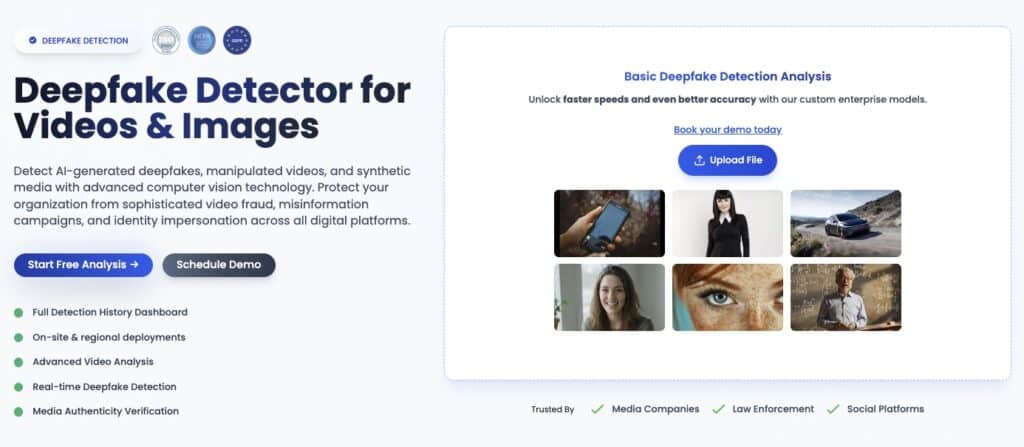
Our guide to deepfake detection software covers what to expect when testing these engines at the enterprise level.
Out-of-band and step-up verification
Verify high-risk actions via an alternative, reliable means such as an app push to a verified device or a one-time code to a registered number.
If the second-factor authentication is outside the phone call, a cloned voice alone can never authorize a transfer. This works precisely because it gives up on solving a voice issue and completely removes voice from the decision.
Hence, the most effective control is listed here, as it renders the clone completely irrelevant.
Behavioral and metadata signals
Don’t forget to observe all of the surrounding sounds. The call origin, device fingerprint, carrier data, and behavioral analytics identify call anomalies that have no relation to the sound of the caller.
Even a perfect clone can’t make a call that’s not from the right person at the right location.
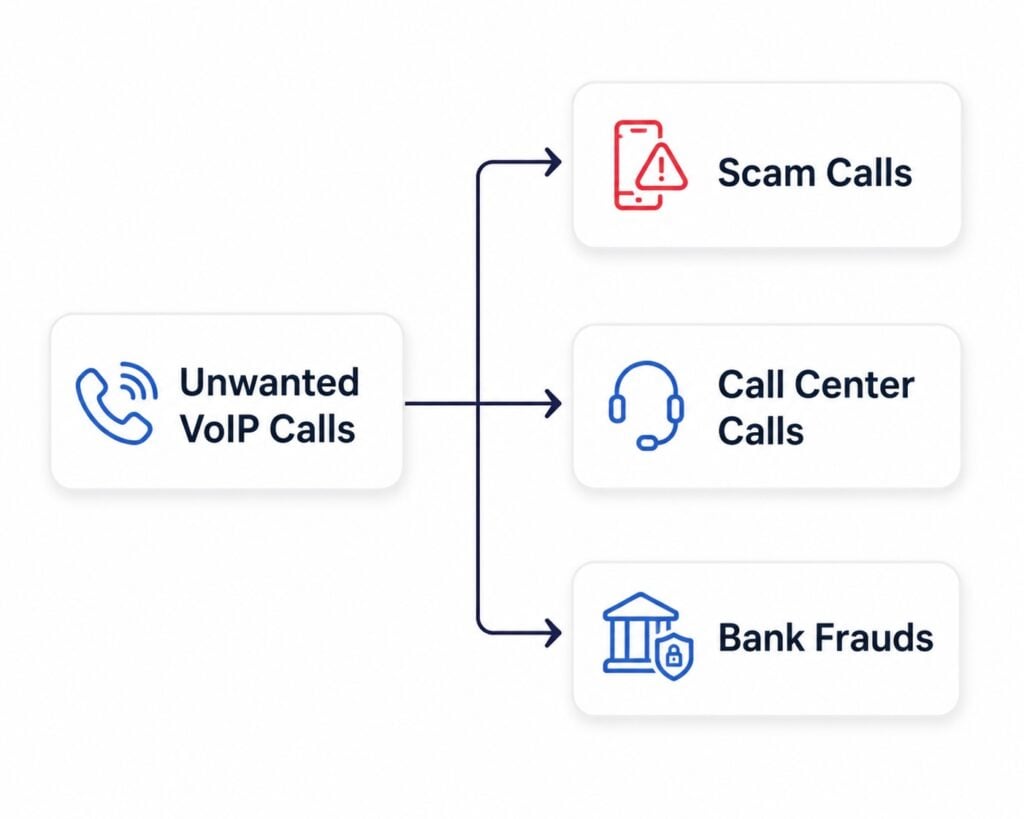
Did you know that most call center scams originate from Mobile Virtual Network Operators (MVNOs) and VOIP lines because of their untraceable numbers? That’s why Caller authentication is a must.
Deliberate friction on high-value, urgent requests
Create friction for scammers and take away their advantage, which is speed. A hold-and-callback should be mandatory for larger and unusual transfers. Multiple approvals will also slow the process speed.
The same pressure tactic drives AI-assisted business email compromise, and the fix is also the same: Never Let Urgency Override Your Process.
Building a Verification Playbook Your Team Can Use
A simple workflow your agents can follow on every call:
- Do not use voice as the only identifier.
- Provide real-time voice-clone detection and automatically switch calls to step-up verification, without the agent initiating the call.
- Do not expect any “VIP” callers to be an exception, and ask for all other confirmation for any large, urgent or unusual transactions.
- Make sure agents are trained on the red flags above, and remember to provide a safe route to stop and recheck.
Frequently Asked Questions
Can you tell if a voice on a call is AI-generated?
Most of the people can’t. A 2025 study revealed that the people mistook the voice voice for the real speaker’s voice about 80% of the time. You need an automated detection and verification layer for security and safety.
Do voice biometrics stop voice cloning?
They do assist, but voice biometrics fit into a multi-layered system. They can’t be reliable alone. In addition, the consumer-grade clones have already outsmarted UK fraud organisations.
An example of voice cloning fraud is when a reporter broke into Lloyds Bank’s voiceprint systems by cloning his own voice using ElevenLabs.
What should an agent do if a call feels cloned?
Mark the call as suspicious, and pass it on to your fraud or security team as per protocol. If you don’t have the proper verification on that same call, don’t process any high-risk requests.
Final Thoughts
The core message is that a voice is no longer an identifier or proof that the person is real. Your agents will not be able to identify a good clone, since, in controlled studies, almost no one can.
Therefore, you can prevent it with a multi-layered protection model, such as voice-clone detection at the audio layer, out-of-band verification for all risky operations, and friction for hasty transfers.
Trusted by businesses for real-time identity verification, TruthScan’s AI voice-clone detection is designed to integrate seamlessly into such a process. Check how it can be integrated into your deepfake detection stack.