
On Telegram right now, refund-as-a-service kits are selling for less than a latte. These kits use AI-generated images to bypass automated refund verification effortlessly.
Old-school hackers wanted your password. Modern fraudsters just want your trust, and they’re using AI to build it by creating evidence that looks 100% authentic.
But as these digital tools make forgery so easy for the average person, how can a business tell the difference between a loyal customer and a high-tech scammer?
In this blog, we’ll explore the 6 most common types of image fraud in 2026, from manipulated receipts to deepfake detector-defying videos, and show you how to protect your revenue with an advanced AI image detector.
Let’s get into it.
Key Takeaways
- In 2026, image fraud is so advanced that human reviewers miss nearly 75% of high-quality AI fakes.
- Fake receipts created by AI jumped from 0% in 2024 to 14% of all fraudulent documents by late 2025.
- Unlike technical hacking, refund fraud now only requires a smartphone and a free AI editing app.
- Modern fraud uses detailed hallucination to create fake skin textures and thermal paper blurs that look 100% authentic.
- Fraudsters now pair fake IDs with matching deepfake detector-defying selfies to bypass identity checks.
- As fraud becomes AI-driven, businesses must use an AI image detector to verify metadata and pixels in under 500ms.
What Are Image-Based Frauds in Refund Workflows?
Image-based fraud in refund workflows involves the submission of manipulated, fabricated, stolen, or AI-generated images to get refunds, reimbursements, or expense approvals.
And where does this happen?
Here are some of the examples:


Never Worry About AI Fraud Again. TruthScan Can Help You:
- Detect AI generated images, text, voice, and video.
- Avoid major AI driven fraud.
- Protect your most sensitive enterprise assets.
- Shopping Online: Sending a fake photo of a broken TV to get a refund (while keeping the perfectly fine TV).
- Work Expenses: Editing a lunch receipt to make it look twice as expensive so the boss pays more.
- Insurance: Using an old photo of a car crash to claim new money.
- Food Apps: Taking a picture of an empty bag and pretending the food never arrived.
- Selling Sites: Sellers on eBay or Amazon using fake invoices to prove they bought authentic items.
In the era of AI fraud detection, the barrier to entry has dropped.
| Feature | Old-School Hacking | Image Fraud |
| What you need | High-tech skills or stolen passwords. | Just a phone and a free editing app |
| The Trick | Stealing your credit card. | Tricking you into trusting a photo |
| Who does it? | Professional hackers. | Regular people or organized groups |
| Cost | Can be expensive to buy data | Completely free to edit a photo |
Common Types of Image-Based Fraud
- Manipulated Receipts
Fraudsters use real receipts but edit key details like amount, date, vendor, or items. This is a primary driver for expense fraud alerts.
Here’s how it’s done:
- They slightly adjust totals (e.g., increase amount or tip) or remove restricted items like alcohol to fit policies.
- They copy a real receipt’s design (layout, fonts, logo), and only change transaction details like date or price.
- They use online receipt generators to create fake receipts for purchases that never happened, often with realistic branding.
AI has made it worse. It can generate paper texture, folds, and camera blur to bypass a standard AI image detector. Fake AI receipts jumped to ~14% of fraud cases in 2025, up from 0% in 2024.
Example:
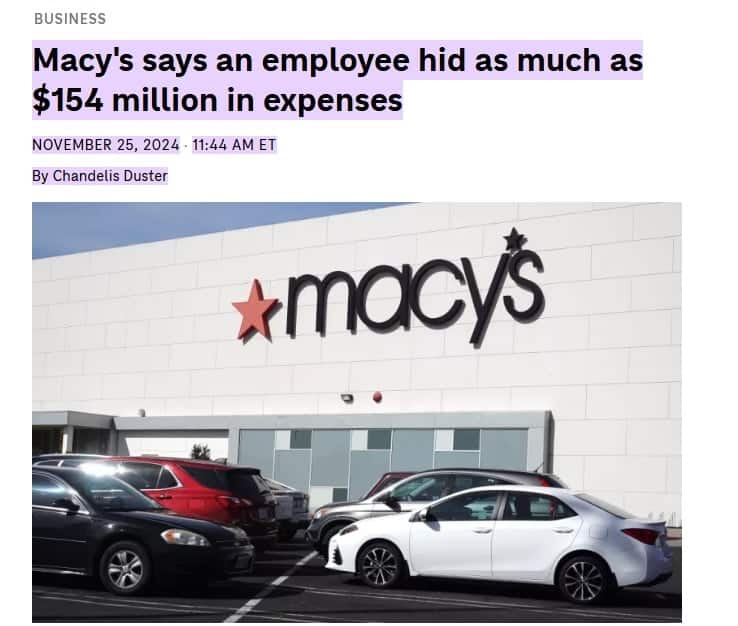
In 2024, a Macy’s employee hid over $154 million in fake expenses by manipulating accounting records over several years.
- Duplicate Submissions
The same receipt is submitted multiple times across different dates or platforms. Automated refund verification is essential here to flag fingerprinted images.
Here’s how it’s done:
- Fraudsters resubmit the same expense months later, hoping no one notices the repeat.
- They send the same receipt to different approvers or departments to avoid detection.
- Screenshot Fraud
Fraudsters submit fake or edited screenshots (payments, deliveries, chats, bank records) as proof to trigger refunds or bypass checks.
Here’s how it’s done:
- They use apps or editing tools to create realistic payment screenshots with fake timestamps and transaction IDs.
- Release products or funds before actual payment is confirmed. This is a surging trend in refund fraud within the food delivery and ecommerce sectors.
- Common tactics include:
- Fake delivery screenshots showing “not delivered”
- Fake payment confirmations for transfers that never happened
- Edited customer support chats claiming a refund was approved
- Altered bank screenshots with changed amounts
It’s widely used in ecommerce and food delivery refunds, where fake screenshots are used to claim missing or incorrect orders.
- Fake Product Images
Fraudsters submit fake or edited photos showing a product as damaged or defective to get a refund, while keeping the original item.
The core scheme:
Order a product → create or edit a damaged photo → submit it as proof → get a refund → keep the product.
Here’s how it’s done:
- Basic editing tools are used to add scratches, cracks, or damage to real photos.
- Fraudsters steal damaged images online and submit them as their own.
- More advanced methods use AI to generate realistic damage (like dents, cracks, or mold).
- Techniques include layering fake damage onto real images and removing metadata to hide edits.
According to the State of Refunds 2026 report by Ravelin, 25% of refund abusers say they use AI mainly to learn techniques and tips for securing fraudulent refunds.
In this case, you need a specialized AI image detector that goes beyond visual checks.
TruthScan’s AI Image Detector can automatically flag these manipulated and AI-generated product photos before a refund is ever approved. It scans for pixel-level anomalies, GAN artifacts, cloning, and metadata mismatches in under 500ms.
Verify receipts automatically with TruthScan’s AI Image Detector
- Stolen or Sourced Images
Fraudsters use images taken from the internet (stock sites, social media, listings) and submit them as their own proof.
Here’s how it’s done:
- Fraudsters remove GPS and date data to hide the image’s original source.
- Organized groups share databases of ready-to-use broken product photos to facilitate refund fraud.
A stolen image looks completely real, and manual reviewers can’t tell if it exists elsewhere online without time-consuming checks.
- AI-Generated or Deepfake Images
Using tools to create completely synthetic documents or faces. This is where a deepfake detector becomes a mechanical necessity for high-value claims.
Here’s how it’s used:
- Creating fake product damage (cracks, water damage, broken screens)
- Generating realistic receipts with correct layout and barcodes
- Producing fake delivery or unboxing photos
- Creating synthetic identity documents to bypass verification
Since AI tools are so easy to access, making fraud is possible for anyone. Governments are starting to treat AI fraud seriously, with fines and even jail time in some countries.
How Fraud Impacts Enterprises
Here are the refund fraud impacts in different sectors:
Financial Impact
- Fraudulent returns cost retailers $103B in 2024, about 15.14% of all returns.
- Consumer fraud losses reached $15.9B in 2025, growing 25% year over year.
- Every $1 lost to chargebacks costs businesses $3.75–$4.61.
Operational Burden
- Manual review doesn’t scale. Humans can’t detect AI edits or pixel-level fraud.
- 76% of merchants now need dedicated teams just to handle chargebacks.
- Ecommerce chargebacks surged 233% in 2025 alone.
Reputational & Strategic Damage
- 76% of customers would stop shopping on a site after fraud.
- High chargeback rates can get businesses blacklisted (MATCH List) for years.
- Teams shift focus from growth to fraud handling and compliance.
Detection Strategies Using AI Tools
Because modern fakes match real ones in logic and detail, humans cannot detect them. You need AI fraud detection that is as advanced as the tech creating the fraud:
TruthScan’s AI Image Detector
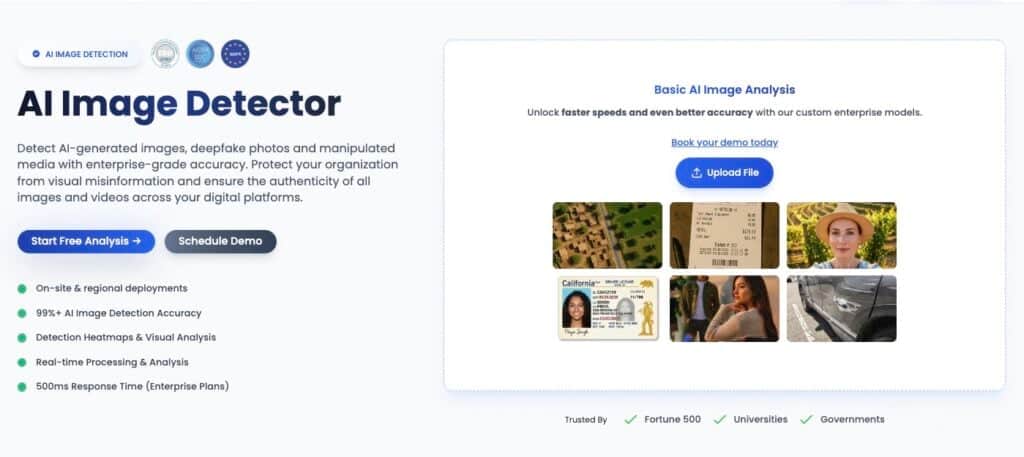
- Scans receipts for edits, AI generation, and inconsistencies before approval.
- Detects fake damage, AI-generated images, or reused photos.
- Flags edited or fake payment proofs before reimbursements.
- Automatically scans thousands of images to trigger expense fraud alerts.
- Adapts quickly to new AI fraud tools, staying effective over time.
TruthScan’s Deepfake Detector
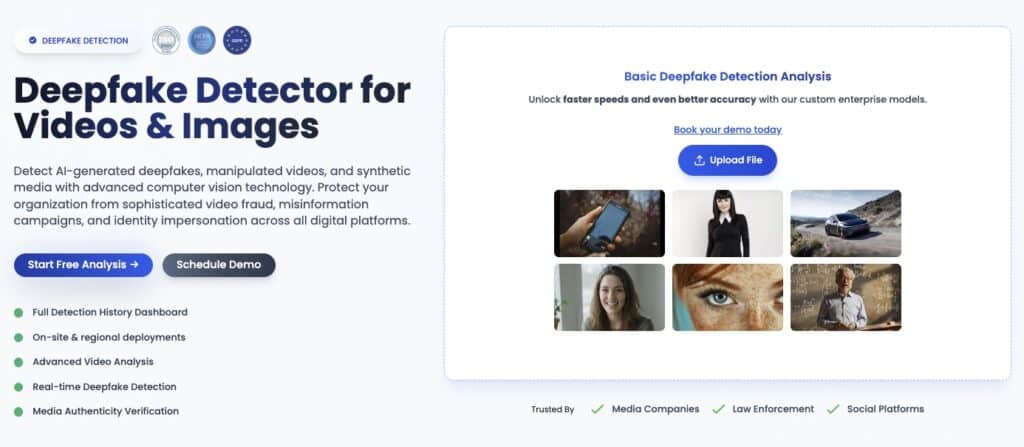
- Detects manipulated or AI-generated video evidence.
- Flags fake profile images or synthetic faces in high-value cases.
- Catches deepfake voice/video used for fake approvals.
- Easily connects to existing systems with real-time analysis and scoring.
Both tools cover everything from edited receipts and fake product images to deepfake videos and identity fraud.
Ensure all submitted images are authentic with TruthScan’s AI Image Detector & Deepfake Detectors
Best Practices for Mitigating Refund Fraud
Here are some of the best practices used by businesses to prevent refund fraud:
| Best Practice | Action | Importance |
| Evidence-based workflows | Treat every image as unverified until checked by AI | Prevents blindly trusting fake submissions |
| Multi-layer verification | Run metadata, pixel, AI, and reverse image checks together | One check can fail; multiple layers improve detection |
| Risk-based routing | Send high-risk cases for review, approve low-risk quickly | Balances fraud control with good user experience |
| Cross-platform duplicate detection | Track and match images across all accounts and platforms | Stops repeat fraud using the same image |
| Native file requirement | Accept only original files with metadata (no edited uploads) | Makes manipulation harder to hide |
| Reviewer training | Train teams to spot patterns and inconsistencies | Humans can catch context issues AI may miss |
| Clear escalation process | Define steps for reviewing and documenting fraud cases | Builds proof for action and reduces confusion |
| API-based automation | Integrate AI checks directly into submission flow | Detects fraud instantly at scale |
| Continuous updates | Regularly update systems to match new AI fraud methods | Keeps detection effective as fraud evolves |
How TruthScan Protects Refund Workflows
TruthScan is a leading AI fraud detection and content verification platform. It analyzes images, videos, audio, and text to stop image fraud and AI-generated manipulation.
Built for enterprise-scale security, TruthScan is fully SOC 2 Type II, ISO 27001, and GDPR compliant.
| Fraud Type | TruthScan Tool | What It Detects |
| Manipulated Receipts | AI Image Detector | Detects AI generation, pixel edits, and metadata mismatches to stop expense fraud |
| Duplicate Submissions | AI Image Detector | Provides automated refund verification by identifying reused images via fingerprinting |
| Screenshot Fraud | AI Image Detector | Flags edited screenshots and formatting inconsistencies |
| Fake Product Images | AI Image Detector + Deepfake Detector | Detects AI-generated damage, GAN artifacts, and cloned pixels used in refund fraud |
| Stolen Images | AI Image Detector | Matches images against billions online to find reused content |
| AI/Deepfake Images | Deepfake Detector | Detects synthetic media, face swaps, and deepfake videos |
- Delivers 96–99% accuracy across AI images, videos, and deepfakes.
- Analyzes each submission in under 500ms, triggering real-time expense fraud alerts.
- Provides clear explanations (pixel issues, metadata errors) instead of just pass/fail results.
- Scales easily, from thousands to hundreds of thousands of refund checks without slowdown.
Here’s how you can integrate this into workflows:
- Connects via REST API for real-time and batch processing.
- Supports webhooks, confidence scores, and detailed reports to guide approvals.
- Automatically flags high-risk cases and routes them for review.
Talk to TruthScan About Securing Refund Processes
Image-based fraud is no longer a minor issue, it’s a large-scale business risk. Generative AI has made fraud faster, cheaper, and harder to detect, while social platforms have normalized these tactics.
At the same time, manual review simply cannot keep up.
The reality: as fraud becomes AI-driven, detection must be AI-driven too. Deploy an advanced AI image detector and deepfake detector to protect your revenue.
Stop refund fraud before it happens. Talk to TruthScan today