
As technology is growing with time, it is becoming difficult for retailers to detect theft and fraud with the human eye. This is causing billions of dollars of loss to the businesses.
Scammers are now more aware of the potential gaps. This makes more room for them to manipulate data, generate counterfeit images and videos, create unauthorized identities, false claims, and much more.
This is your guide to learn about the most common retail fraud types, how to detect them, and how automated fraud monitoring creates ways to minimize the retail loss.
La oss dykke ned i det.
Det viktigste å ta med seg
- Retail fraud is not just a customer service issue. It is also a criminal offense.
- AI-generated documents make it easier to collapse the standard review protocol
- Retailers’ refund and return policies are one of the biggest targets for fraudsters
- Automated fraud now requires AI-generated prevention, since manual processes are no longer reliable
- It is important to fill the gaps in the system prevention process with multi-layered defense, as it is easier for scammers to enter through them.
What is Retail Fraud?
Retail fraud is an act of deceiving a retailer intentionally to have a financial advantage or harm businesses. It covers data manipulation or ways to gain money illegally.
Anyone can commit retail fraud, including customers, employees, or a group of criminals.
The term “shoplifting” is used informally by many people, whereas the right word is retail fraud.
Aldri bekymre deg for AI-svindel igjen. TruthScan Kan hjelpe deg:
- Oppdage AI generert bilder, tekst, tale og video.
- Unngå stor AI-drevet svindel.
- Beskytt dine mest følsom virksomhetens eiendeler.
This slight contrast matters because, as per the law, retail fraud holds a broader meaning.
A customer stepping out of a shop with stolen goods, or simply someone who makes use of the retail environment to steal what does not belong to them, comes under it.
To understand how serious the offense can be, we should keep in mind two major factors:
- The value of the stolen item
- And whether that person has any criminal record
For retailers, this, along with having an impact on the loyal customer, also harms businesses.
Overview of Retail Fraud
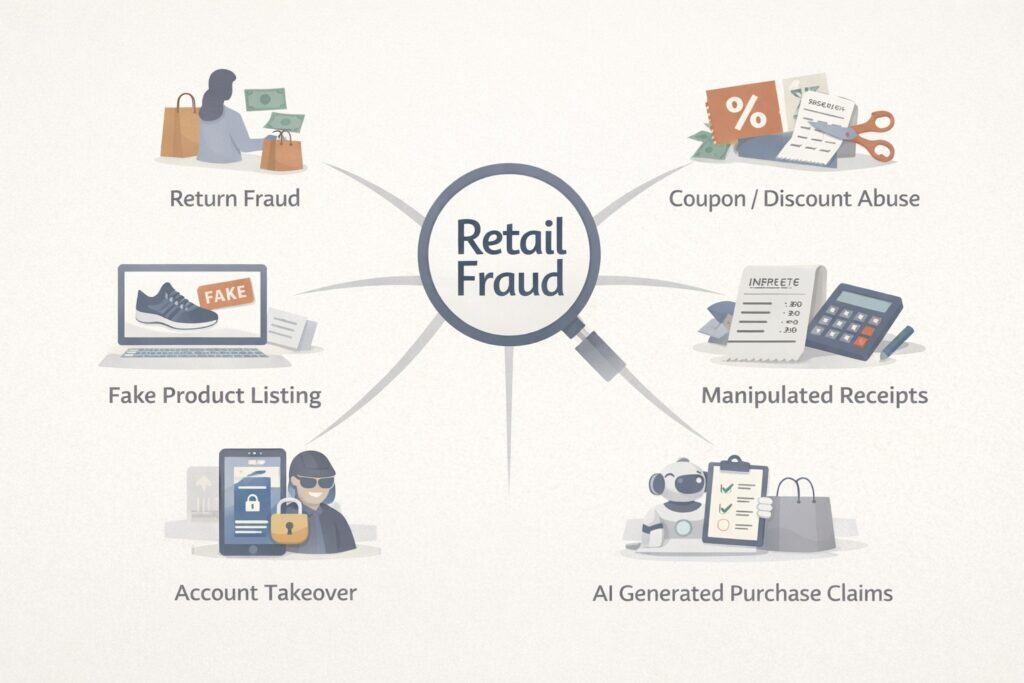
With time, as the retail trends and technology evolve, so does the retail fraud, turning it into a complete ecosystem. Online shopping and e-commerce sites have opened more ways for fabricated product listings and the purchase claims generated through AI.
The use of modern technology to fake evidence has made the latest retail fraud activities quite challenging.
Scammers use AI image generators to generate counterfeit receipts, deepfake voice generators to act like genuine customers, and AI bots to abuse the retail systems.
Therefore, AI-based detecting devices and software have become part of the strategy to avoid loss.
As these threats keep evolving, especially for smaller businesses, it is important to understand retail fraud to build a resilient and fraud-proof system. Without knowing what retail fraud looks like, businesses will be open to vulnerabilities.
Common Types of Retail Fraud
Although there are hundreds of retail frauds that people fall for, here are some of the most common ones.
1. Return fraud
Return fraud is an intentional act to exploit the retailer’s returns policy. It is one of the easiest misuses of policy to gain financial advantage in the form of return or store credit.
Some common types of return fraud include:
- When a customer purchases any clothing or other items with the motive to wear them just once for a special occasion, and returns them as if they were unused.
- Scammers buy a new item and replace it with the older or broken item they already own.
- When a user purchases some items using a stolen credit card and returns them for cash or store credit.
Return fraud is a difficult conflict to address as it affects the customer relationship. Integrating fraud monitoring tools can reduce the number of return fraud.
2. Coupon or discount abuse
Abusing promotional offers comes under the coupon or discount abuse. This may include fake or expired coupons and exploiting them in a way that was never intended by the retailer.
The most common method used by scammers is using multiple accounts to claim offers. Fraudsters often manipulate the barcode to avail discounts or resell the coupons to gain financial profits.
Another common strategy is widespread code sharing, where the discount code gets posted online for the audience that retailers never intended to target.
Such thefts not only drive up operational costs but also reduce the sales margin.
Hence, it is important to closely monitor the redemption data and integrate the fraud prevention tools to identify the usual redemption patterns.
3. Fake product listings
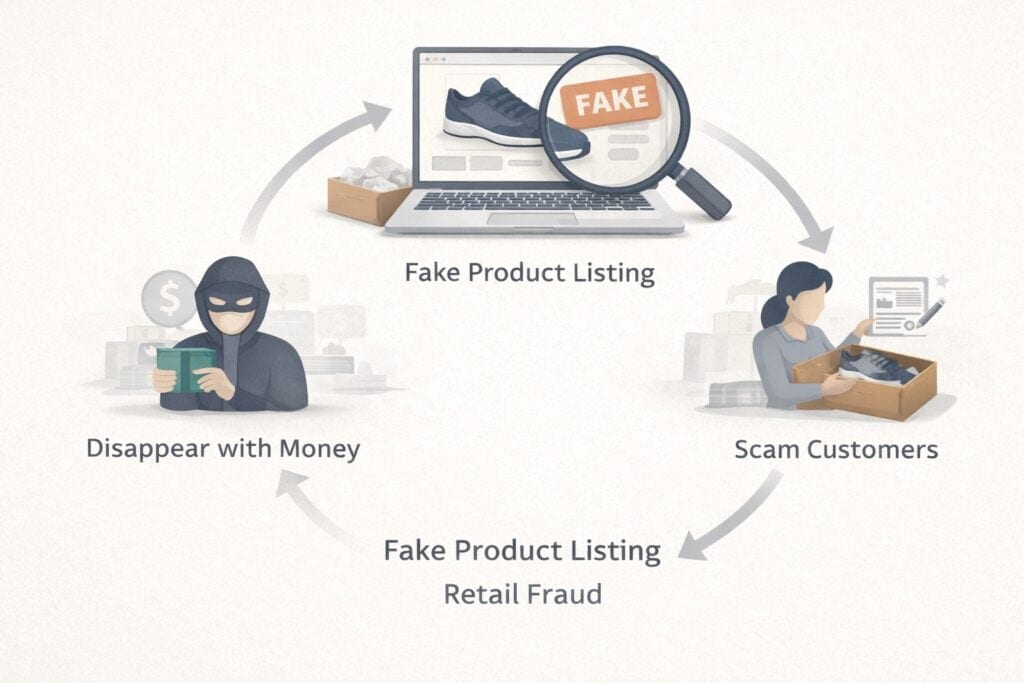
Fake product listing is an emerging threat in the e-commerce and marketplace industries.
This is a form of image-based return fraud where the unauthorized sellers produce an illegal version of branded products that mimics the originals.
Some scammers manufacture low-quality products, while others collect payments and disappear.
Such fake products give rise to legal and safety risks. Fake products fail to meet the quality standards that a genuine product provides. The brands whose names appear on the product face a decline in sales and lose their credibility.
As long as the fake listing stays active, there is a high chance that customers will be misled, and more damage will be done. So it is important for any retail operation operating digitally to monitor fake listings.
4. Manipulated receipts
For any retailer, receipts are a form of trust and evidence between the customer and the business.
Today, with the latest technology, fraudsters can easily generate fake receipts, damaging the trust and proof of evidence that the money was exchanged against the product or the service.
Counterfeit receipts can simply be altered digitally or can be created from scratch. Either way, the motive remains the same, which is to gain financial benefits, goods, or services that a scammer does not have access to.
The manipulated receipts are designed to look real and have an illegal access to items or services.
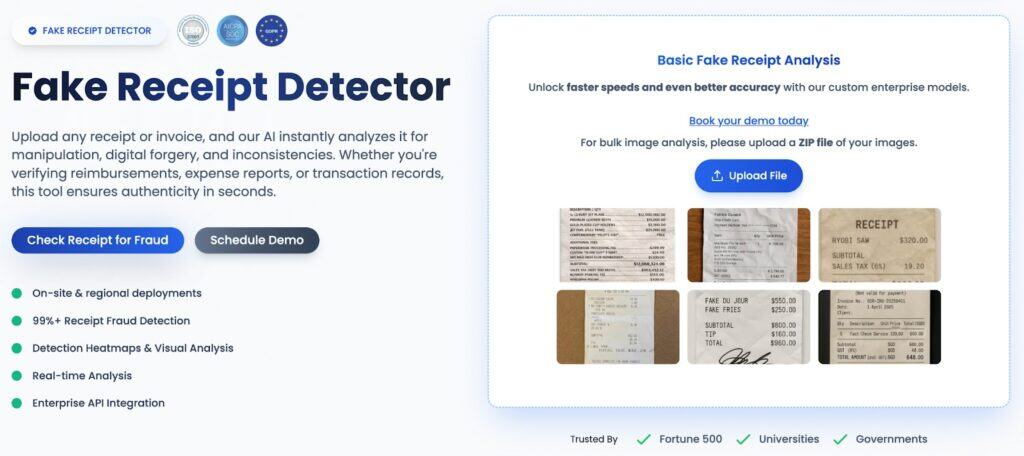
It is important for all kinds of businesses and retailers to spot them using the Detektor for falske kvitteringer, which is capable of identifying any counterfeit document that a human eye can’t catch.
5. Account takeover
Account takeover fraud is a form where a user owns an account on any digital retail platform, and a scammer gains unauthorized access to the account. Cybercriminals simply require login credentials to own any user’s account.
There are some common patterns to identify such thefts, including sudden change of user’s account details, login from a new device, multiple failed attempts to login, usual purchases, loyalty rewards redemption, and many others.
For the retailers, there is a sudden financial loss with brand reputation damage when a customer inquires about accountability.
Hence, detecting account takeover can be made easy using the AI image detector to monitor and detect the fraud before the damage is done.
6. AI-generated purchase claims
Retailers are aware of how a thoughtful return and refund policy can strengthen the trust between the business and its customers.
With the emerging technology and tools, this trust is turning into a liability. AI-generated purchase claims make it easier to generate fabricated evidence.
It is easier for the scammer to make a genuine purchase and later generate evidence of damage or defect in the product using any AI tool. The fraudster would know that the claim is false, the product is fine, but the images generated are convincing enough for the retailer to review the process.
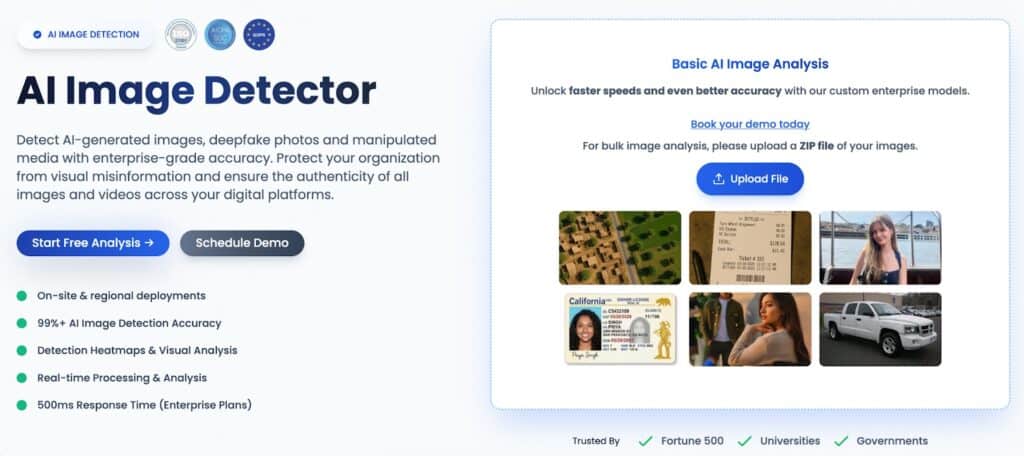
This is where our AI-bildedetektor comes in. This fills the gap between what is faked and what is real and makes human judgment unreliable.
It is highly important for retailers to use AI image detectors to fill the gap and make the system less vulnerable to this kind of fraud.
Best Practices to Spot Retail Fraud
Spotting retail fraud is not limited to having technology or large teams to monitor, but also requires operational discipline and consistency.
- First and foremost is to monitor the transactions in real-time. It makes it easier to follow the user patterns and helps the retailers to identify theft right away. Any delay would increase the chances of repeating.
- Training the staff on a regular basis to help them identify any suspicious moves.
- Identifying red flags in early stages, like a return request against a high-value item, any receipts that look odd, or a customer who flinches a bit when asked for identification.
- Inventory audits on a regular basis to identify if there are any stock levels that do not correlate with the sales record.
- Always verifying customer information for online orders.
- Making sure that the customers’ shipping and billing addresses are the same.
- Audit coupon redemption data, as high redemption would indicate fraud.
It is convenient for the fraudsters to find their way through gaps. Ensure to cover gaps using AI loss detectors or fraud monitors to avoid financial loss.
Protecting Your Organization From Retail Fraud
Modern retail can’t rely on the traditional methods. Scams were easier to spot than manual processes, basic return and refund policies.
Today, with manipulated data, images, and videos generated through AI, and fake identities, it is not easy to fight. Below are some ways to protect your business from retail fraud:
- Start by figuring out where the fraud can enter your operations and structure a fraud risk assessment against it.
- Retailers that deal with high volumes of images, coupons, and refund claims can prevent fraud in real time with the AI-bildedetektor.
- Scammers can easily fabricate the visual proof of damaged items that retailers can prevent from happening using the Deepfake Detector.
- Ensuring that there is not only a single protection point, but it should be layered, leaving no loophole for scammers to exploit the system.
- Bruk Detektor for falske kvitteringer (to check the authenticity of the receipts) that analyzes at a pixel level that can be missed by the naked eye.
Automated fraud monitoring using these tools, combined with strict policies and real-time protection, can help with retail loss.
How TruthScan Secures Retail Transactions
TruthScan is designed for the latest retail fraud ecosystem. It provides retailers with the right tools they require to validate every document, identity, and claim.
For retailers, TruthScan’s AI-bildedetektor comes in handy as it supports media images, videos, products, and claims. It is trained to recognize if there are any signs of manipulation even before the refund is made.
Våre Deepfake Detector developed by TruthScan is also great enough to verify the authenticity of the images and videos.
This is designed to enable the retailers to verify their customers’ identities. Retail loss detection not only reduces fraud rate for the businesses but also strengthens the customer relationship.
If any retailer is struggling with fake documents and manipulated data, TruthScan’s Detektor for falske kvitteringer helps them scrutinize each receipt.
Talk to TruthScan About Preventing Retail Fraud
Businesses can’t ignore retail fraud as it affects their revenue and relationship with customers. As AI is getting better by the day, fraudsters are also becoming smarter.
Therefore, it is important to adapt and make use of modern AI tools to prevent retail fraud. TruthScan is that one-stop shop for retailers in this domain.
By integrating TruthScan’s features, including AI image detector, deepfake detector, fake receipt detector, and automated fraud monitoring, retailers can build a strong defense against retail fraud.
Secure your margins, protect transactions, and provide a consistent digital retail experience for your customers.
Kontakt TruthScan today to speed up your retail loss detection and find out how AI fraud detection can help you save your business and its reputation.