It takes less than 5 seconds of public audio from a LinkedIn video for a fraudster to clone your CEO’s voice and face.
In the time it took you to read this sentence, an executive fraud attack could have been launched against someone’s finance department.
Is your payment fraud prevention fast enough to catch a deepfake?
And what are you doing right now to detect it?
In this blog, we’ll break down the different types of executive video fraud, the techniques fraudsters use, and the key red flags to watch for. You’ll also learn how you can use AI to prevent these attacks before money leaves your account.
Plongeons dans le vif du sujet.
Principaux enseignements
- Deepfake executive fraud caused $410M in losses in the first half of 2025.
- Criminals use face swaps, voice cloning, and live video manipulation techniques.
- AI video detectors can spot small visual and audio flaws that humans miss, and they do it instantly.
- When AI video checks are placed at the payment approval stage, fake videos can be blocked before money is sent.
- Combining AI video checks with callback verification and dual approval removes the weak point most fraud attacks target.
- In 2026, stopping payment fraud requires automated AI detection. Human judgment alone isn’t enough anymore.
What are Executive Videos Triggering Payments?
Executive videos triggering payments are recorded or live videos that ask or imply a finance team member should move money.
They come in three types:
- CEO approval recordings
Pre-recorded videos where the CEO approves a transfer, vendor payment, or acquisition. Legitimately, they’re for audits or cross-time-zone communication.
Ne vous inquiétez plus jamais de la fraude à l'IA. TruthScan peut vous aider :
- Détecter l'IA générée des images, du texte, de la voix et de la vidéo.
- Éviter la fraude majeure induite par l'IA.
- Protégez vos plus sensible les actifs de l'entreprise.
Fraud example: Attackers train AI on public CEO footage (such as LinkedIn, earnings calls, TV interviews) and generate a fake video approving a payment.
Finance sees the CEO’s face and voice, thinks it’s real, and processes the transfer without questioning.
- CFO authorization videos
Live or recorded calls of the CFO authorizing large transactions. CFOs are key targets because their approval carries top authority.
- Internal finance communications
Routine-looking videos sent via Slack or Teams to bypass standard payment fraud prevention protocols.
Fraud example:
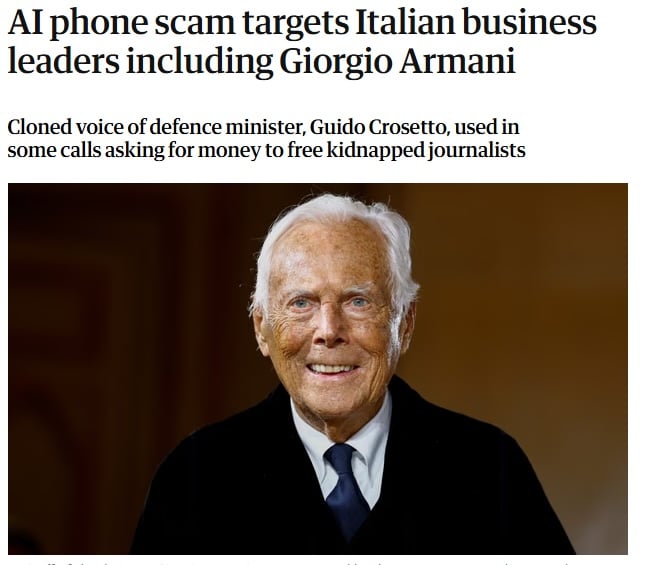
Italian Executives (Early 2025) — €1M+ lost: Criminals cloned multiple leaders’ voices and faces to spoof an Italian executive team, leading to a €1M+ loss before the first deepfake detection sweep was even conducted.
Growing Threat of Deepfake Executive Fraud
Deepfake-driven executive fraud is exploding. Losses hit $410M in the first half of 2025, and humans can only detect a small proportion of this number.
Let’s see some of the executive fraud examples:
Arup, Hong Kong (Feb 2024) — $25M loss: A finance employee joined a video call that appeared to include her CFO and colleagues. The call was AI-generated using old meeting footage.
She made 15 transfers totaling HK$200M before confirming instructions.
Singapore Multinational (Mar 2025) — $499K loss: A finance director approved a Zoom call showing an AI-generated CFO and leadership team.
The transfer went through because the call was framed as an urgent acquisition. Without an AI video detector, the human eye simply stood no chance.
Ferrari (Jul 2024) — Attack stopped: Scammers cloned the CEO’s voice on WhatsApp to request a confidential transfer. Executives asked a verification question AI couldn’t answer. No funds were lost.
Techniques Fraudsters Use to Manipulate Videos
| Technique | How It Works | Why It’s Dangerous |
| Face Swap / Deepfake Video | AI is trained on videos of an executive and places their face onto another person’s body. Can work live or in recorded videos. | Looks very real. Bypasses basic visual deepfake detection. |
| Voice Cloning | AI copies a person’s voice using a few seconds of audio from interviews, calls, or speeches. | Sounds real; makes executive fraud hard to question |
| Real-Time Face Injection | Software replaces a person’s face during a live video call using a virtual camera. | Allows full live conversations while appearing as the executive. |
| Multi-Person Fake Meetings | Attackers create an entire video call with multiple fake participants. | Feels more believable because many colleagues seem to agree. |
| OSINT Research (Public Data Research) | Fraudsters collect public videos, org charts, and company info before attacking. | Makes the executive fraud attempt highly targeted. |
| Platform & Channel Spoofing | Fake video is combined with fake emails, WhatsApp accounts, or chat messages. | Multiple channels make the scam look more real. |
| Fraud-as-a-Service | Deepfake tools and scam kits are sold online cheaply. | Anyone can run advanced scams. Very low cost, very high payout. |
Signs of Potentially Manipulated Executive Videos
Here are some of the deepfake red flags that a reliable deepfake detector can catch automatically:
Visual Signs
- Blinking: Blinks too little or at weird times.
- Lip-sync: Mouth and voice don’t match.
- Face edges: Face looks blurry or fuzzy around hair/neck.
- Side view: Face looks wrong when they turn their head.
- Frozen head: Neck and shoulders don’t move naturally.
- Reflections: Eyes or glasses don’t match lighting.
- Skin: Too smooth or fake-looking.
- Lighting: Shadows don’t match the room.
- Hand test: Objects in front of the face cause weird effects.
Audio Signs
- Robot-like voice: Too clean or unnatural.
- Odd pauses: Weird hesitations in talking.
- No background noise: Sound too perfect for the room.
- Accent changes: Voice sounds slightly off to people who know them.
Behavior & Context
- Urgent + secret: Pressures you to act fast alone.
- Wrong platform: Uses personal apps to bypass automated fraud detection.
- No double check: Avoids verification through official number.
- Skipping rules: Ignores normal payment fraud prevention steps.
Quick Live Tests
- Ask them to show a side view.
- See if their face shows glitches.
- Stick out their tongue to spot mistakes.
- Perform a live AI video verification check by asking something only they would know.
- End call and call official number to confirm.
How AI Can Detect Executive Video Fraud
Studies show that people cannot accurately identify high-quality deepfakes, and the technology is advancing faster than human training.
We have to use advanced AI to detect AI-based frauds;
- Deepfake Detector: Spot synthetic visuals
TruthScan’s Deepfake Detector protects finance teams from executive video fraud by catching manipulations humans can’t see.
Need to catch subtle manipulations? → Detects tiny facial, skin, and lighting inconsistencies that real-time eyes would miss.
Need to verify natural behavior? → Flags videos where AI fails to replicate real human motion.
Need to examine the file itself? → Examines digital fingerprints to prove whether a video was tampered or AI-generated.
Need to spot fake participants? → Spots AI-generated colleagues in group calls, preventing social-engineering attacks.
Need real-time protection? → Monitors video calls as they happen so suspicious requests don’t trigger payments.
Need automated workflow support? → Flags, holds, or escalates suspicious videos automatically, keeping finance teams focused on real threats.
Need enterprise-level accuracy? → 99%+ detection with confidence scores and timestamps for internal audits, fraud investigations, and regulatory reporting.
- AI Video Detector
TruthScan AI video detector scans every video-linked payment before approval, flagging suspicious content with confidence scores.
Need to stop fake payments? → Pre-clearance gate automatically holds suspicious videos so they don’t trigger a payment.
Need to check all communication? → TruthScan analyzes video, audio, and text together to spot related instructions,
Need high-volume support? → API and bulk processing handle hundreds of videos without slowing workflows.
Need live call protection? → Browser extension alerts instantly during video calls.
Need to stay ahead of AI fraud? → Continuous updates catch the latest deepfakes.
Embedding Verification in Payment Workflows
To strengthen payment fraud prevention, embed verification directly into your workflow:
Step 1: Pre-Authorization Video Screening
AI checks every video via a Deepfake detector before approval. Flagged videos go to a human reviewer.
Step 2: Dual Authorization
High-value payments require two independent approvals from separate channels.
Step 3: Out-of-Band Callback
Confirm instructions via a trusted, separate channel like call, verified Slack, or in-person.
Step 4: Anomaly Scoring
Combine risk signals (high value, new account, off-hours, urgency, platform mismatch) with video score to trigger extra verification.
Step 5: Verified Channels Only
Allow payments only via approved corporate platforms. Ignore personal emails, WhatsApp, or unverified links.
Step 6: C2PA Credentials
Use cryptographic signatures in internal videos. Any tampered or AI-generated video fails AI video verification.
Strategies to Reduce Executive Video Fraud
Here’s how organizations can protect themselves.
# 1 — Train Finance Teams for AI Impersonation
Employees should practice simulated deepfake attacks and learn verification under pressure:
| Training Focus | Importance |
| Callback verification | Prevents attackers from using fake phone numbers or emails |
| Live video checks | Tongue movement, side profile, occlusion tests spot fakes |
| Payment hold protocol | Empowers staff to pause transactions safely |
| Escalation process | Ensures suspicious requests reach security quickly |
# 2 — Safe Words for Verification
Instead of just trusting video, set pre-agreed phrases or challenge questions to prevent executive fraud:
- Known only to a small, defined group.
- If an executive can’t provide it, the interaction is terminated and security alerted.
- Has successfully stopped real boardroom attacks.
# 3 — Secure Executives’ Digital Footprint
Public videos feed deepfake AI models. Reduce exposure to protect against automated fraud detection bypasses:
| Action | Objectif |
| Audit existing executive videos/audio | Know what’s available online for training AI models |
| Limit high-res, cleanly-lit recordings | Makes it harder for attackers to create realistic fakes |
| Executive briefing | Ensure staff understand every public recording is potential attack material |
| Balance public presence | Keep investor, press, and marketing needs, but post deliberately |
# 4 — Apply Zero Trust for Financial Instructions
Never trust video, voice, or email alone. Always verify via a separate channel.
- Policies should allow staff to pause payments even under executive pressure.
- Removing urgency and authority breaks the attack’s psychological leverage.
# 5 — Cybersecurity Insurance & Testing
| Strategy | Objectif |
| Insurance with AI fraud coverage | Protects against deepfake social engineering and business interruption |
| Penetration testing & red team exercises | Simulates attacks to ensure callback and verification processes work in practice |
# 6 — Comply With Emerging Regulations
- EU AI Act (Aug 2025): All deepfakes must be clearly labeled.
- US TAKE IT DOWN Act: Criminalizes non-consensual intimate deepfakes.
- FinCEN guidance: Reference FIN-2024-DEEPFAKEFRAUD when reporting suspicious activity.
- Regulated sectors must document steps taken to prevent fraud.
How TruthScan Enhances Video Payment Security
TruthScan is an AI fraud detection platform protecting over 250 million users from fake videos, images, audio, and text.
It offers six key features to the organizations securing payments through executive video:
- Check videos at the workflow gate
It plugs into your payment and communication systems. Every video is automatically scanned, so your team only looks at ones that seem suspicious. - Full forensic analysis with logs
Each result comes with a confidence score, timestamp, and details. This gives you a full audit trail for compliance and investigations.
- Always up-to-date AI detection
TruthScan deepfake detector updates its models as new AI tools appear. You get the latest protection before fraudsters catch up. - Detect fraud across all channels
It doesn’t just check video. Audio, images, emails, and chats are all analyzed so coordinated attacks are caught. - Built for big enterprise volumes
Handles large amounts of videos easily. Custom models reach 99%+ accuracy, even for heavy workloads. - Real-time protection during calls
A browser alert shows if a video is fake while the call is happening, before any payment is made.
Talk to TruthScan About Protecting Payments From Deepfakes
A single successful deepfake attack can cost an organization $500,000 or more, yet the technology to launch it can cost less than $2. That’s the scale of the threat.
You can avoid massive losses by embedding AI-based video verification directly into payment approval workflows.
- Stop fraudulent payment requests before they are processed
- Real-time call protection for executive authorization
- Audit logs for compliance and investigation
- Continuous updates to catch the latest deepfake tools
TruthScan provides enterprise-grade deepfake detection and AI video verification tools. With API integration, you can make sure every executive video is verified before a payment goes through.
Schedule a demo or consult with the TruthScan team at Truthscan.com to assess your exposure and build a payment verification system ready for 2026.