
Whether you’re scaling or not, processing thousands of refunds every quarter is often a nightmare. But the real problem? You may not have a reliable way to know how many of those claims were legitimate.
Refund fraud has been costing online marketplaces billions annually. Fake damage photos are the primary weapon, and they’re now easier than ever to make.
Scammers and fraudsters send their doctored images showing products that were “allegedly” damaged in transit.
The truth most business owners don’t see until they sum up all the papers is that the impact goes beyond the refunded amount. That could be in the form of shipping, inventory loss, chargebacks, or a rising fraud-to-sales ratio.
What’s worse? Traditional manual review can’t always keep pace with the volume or sophistication of modern fraud tactics.
This guide explains how C-level executives can eliminate marketplace refund fraud through AI-powered image verification.
You’ll learn why manual processes fail, how fraudsters exploit visual evidence, and how to implement automated detection that scales with your business.
Let’s jump in.
Keskeiset asiat
- Marketplace refund fraud is a massive financial drain, where scammers use AI-generated or manipulated photos of “damaged” goods to keep both the product and the refunded money.
- Traditional manual photo review fails at scale because human eyes cannot detect pixel-level edits, metadata anomalies, or synthetic images created by modern generative AI.
- Beyond the direct cost of the refund, businesses suffer from inventory loss, high chargeback fees, and operational strain that distracts teams from serving legitimate customers.
- AI-powered verification acts as an automated first line of defense, scanning images in real-time for cloning, airbrushing, and stolen stock photos with nearly 99% accuracy.
- Integrating tools like TruthScan allows marketplaces to fast-track low-risk claims for better customer experience while flagging high-risk cases for expert review based on confidence scores.
- Implementing Undetectable AI-driven detection not only protects seller revenue and platform integrity but also provides structured data to help executives track and stay ahead of emerging fraud trends.
What Is Marketplace Refund Fraud?
Refund fraud happens when customers deliberately deceive your marketplace to obtain refunds they don’t deserve.
The scheme is simple: order a product, claim it arrived damaged, submit fake evidence, get a refund, and keep the product.
Here’s what makes marketplace refund fraud particularly damaging:
Älä enää koskaan ole huolissasi tekoälypetoksista. TruthScan Voi auttaa sinua:
- Tunnista AI luotu kuvat, teksti, ääni ja video.
- Vältä merkittävä tekoälyyn perustuva petos.
- Suojaa kaikkein herkkä yrityksen omaisuuserät.
- Loss of merchandise: You refund the money and rarely recover the product.
- Chargeback fees: Fraudulent claims often escalate to credit card disputes, costing you up to $100 per chargeback.
- Operational drain: Your customer service team wastes hours investigating fraudulent claims instead of serving legitimate customers.
- Seller impact: If you operate a multi-vendor marketplace, fraud directly harms your sellers. They lose revenue, inventory, and trust in your platform.
- Reputation damage: Sellers leave platforms that don’t protect them from fraud. Buyers lose confidence when fraud prevention creates friction for legitimate returns.
The core issue is verification. You need visual evidence to process damage claims, but that same evidence is trivially easy to fake.
Fraudsters know this and exploit the gap between what your manual review process can catch and what modern technology makes possible.
Why Manual Photo Review Falls Short
Your customer service team reviews damage photos the same way they’ve always done it: human eyeballs looking at images.
This approach made sense when refund volumes were manageable, and photo manipulation required specialized skills.
But not anymore.
Manual review has three fundamental problems:
- Volume overwhelms accuracy: A typical reviewer examines hundreds of photos per day. At that pace, detailed forensic analysis is impossible. Your team is looking for obvious red flags, not sophisticated manipulation.
- Inconsistent standards: Different reviewers apply different criteria. What one agent flags as suspicious, another approves without question. This inconsistency creates exploitable patterns that organized fraud rings identify and abuse.
- Human limitations: Even trained reviewers can’t detect pixel-level manipulation, AI-generated images, or subtle metadata anomalies. The tools fraudsters use have advanced far beyond what the human eye can reliably catch.
Consider the math. If each manual review takes three minutes and you process 10,000 refund requests monthly, that’s 500 hours of labor. At $25 per hour (loaded cost), you’re spending $12,500 monthly just on photo review. And you’re still missing fraud.
The other problem is psychological. Reviewers face pressure to approve claims quickly. Denying a refund creates customer service escalations, angry emails, and negative reviews.
The path of least resistance is approval, especially when the evidence looks plausible enough.
How Fake Damage Photos Are Used to Exploit Marketplaces

Fraudsters have refined their tactics into repeatable playbooks.
These patterns will help you recognize the scale of the problem:
- Photo editing manipulation: Basic apps like Photoshop or free alternatives make it easy to add convincing damage.
- AI-generated damage: Generative AI tools can create entirely synthetic images of damaged products.
- Staged damage: Some fraudsters physically damage the product after receiving it, photograph the damage, then claim it arrived that way.
- Stock photo theft: Fraudsters search for damage photos online, download them, and submit them as their own evidence.
- Metadata stripping: Smart fraudsters remove EXIF data from photos to hide when and where the image was created.
- Repeat targeting: Organized fraud rings create multiple accounts and submit coordinated refund requests.
How AI Image Verification Stops Refund Fraud
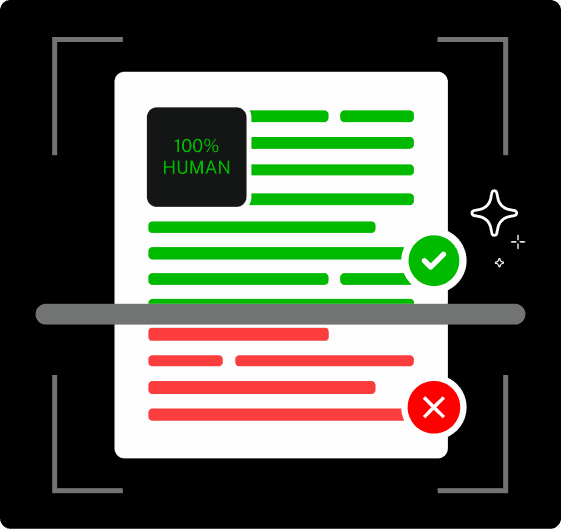
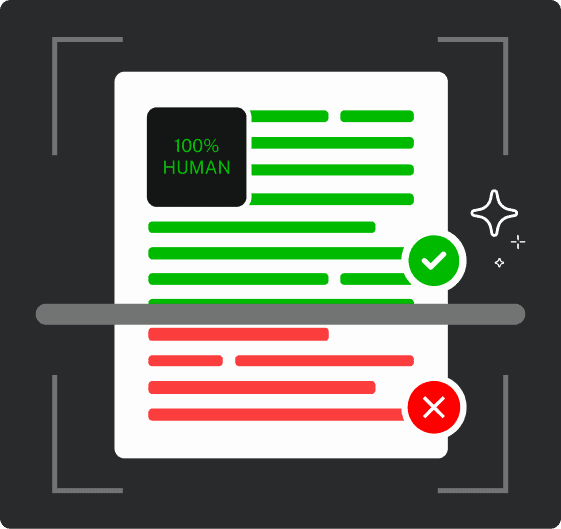
AI-powered image verification analyzes photos with a level of detail beyond that of human reviewers. The technology examines multiple fraud indicators simultaneously and delivers instant verdicts.
Here’s what AI detection looks at:
- Pixel-level manipulation: AI algorithms detect inconsistencies in pixel patterns that indicate photo editing. These inconsistencies are invisible to humans but obvious to trained models. The system identifies cloned regions, airbrushed areas, and inserted elements.
- Metatiedon rikostekninen tutkiminen: AI extracts and analyzes EXIF data, timestamps, device information, and geolocation data. It flags photos with missing metadata or metadata that contradicts the claimed damage timeline.
- AI generation detection: Specialized models identify images created by generative AI tools. These synthetic images have statistical properties that differ from real photographs, even when they look visually identical.
- Reverse image search: The system searches billions of web images to identify stock photos or recycled fraud images. If the submitted damage photo appears elsewhere online, it’s flagged.
- Pattern recognition: AI learns from historical fraud cases to identify suspicious patterns. If an account submits damage claims that match known fraud signatures, the system raises an alert.
- Damage authenticity: Advanced models assess whether the damage shown is consistent with shipping damage versus post-delivery damage. They analyze impact patterns, stress indicators, and material behavior.
AI detection also reduces false positives. The technology both flags suspicious images and provides confidence scores and specific reasons for each flag.
Your team can prioritize high-risk cases while fast-tracking low-risk approvals.
Integrating AI Detection Into Marketplace Workflows
Implementing AI image verification doesn’t require rebuilding your entire returns infrastructure. Modern solutions integrate into existing workflows through APIs and plugins.
The typical integration process takes 2-4 weeks:
- API connection: Your development team connects the AI verification system to your marketplace platform. The integration triggers automatically when a customer submits a refund request with photo evidence.
- Automated scanning: Every uploaded image is sent to the AI system for analysis. The scan happens in real time once the customer submits their claim.
- Risk scoring: The AI returns a fraud risk score (0-100) and specific findings. High-risk images are flagged for manual review, while low-risk images are fast-tracked for approval.
- Review queue prioritization: Your customer service dashboard automatically sorts flagged cases by risk level so your team can focus on genuine fraud while processing routine claims faster.
- Decision support: For flagged cases, the system provides detailed evidence, including manipulation indicators, metadata anomalies, and comparisons with known fraud patterns. Your team has the context they need to make informed decisions.
The system learns from your decisions. When your team approves or denies a flagged case, the AI incorporates that feedback to improve future detection.
Over time, accuracy increases and false positive rates drop.
Benefits of Using AI to Prevent Refund Fraud
The ROI on AI fraud detection is measurable and immediate:
- Fraud reduction: Marketplaces typically see a significant reduction in successful refund fraud within the first few months of implementation.
- Cost savings: Every prevented fraudulent refund saves the product value plus operational costs. For a marketplace preventing 1,000 fraudulent refunds monthly at an average of $75 per refund, that’s $900,000 in annual savings.
- Faster processing: Legitimate claims get approved faster because your team isn’t buried in manual photo review. Customer satisfaction improves.
- Seller protection: Multi-vendor marketplaces can protect seller revenue and build trust. Sellers stay on your platform when they know they’re protected from fraud.
- Skaalautuvuus: AI detection scales effortlessly with transaction volume. You can grow your marketplace without proportionally growing your fraud review team.
- Data insights: The system generates analytics on fraud trends, high-risk product categories, and emerging tactics. You can make strategic decisions based on actual fraud data.
- Chargeback prevention: Catching fraud at the refund stage prevents it from escalating to chargebacks. You save on chargeback fees and protect your relationships with your payment processor.
Best Practices for Marketplaces
AI detection is most effective when combined with operational best practices.
Ongoing AI Monitoring
Your fraud landscape evolves constantly. Fraudsters develop new tactics, and legitimate customer behavior changes. In turn, your AI system needs regular tuning to stay effective.
Set up monthly fraud reviews with your AI vendor. Analyze false positive rates, missed fraud cases, and emerging patterns. Adjust detection thresholds based on your risk tolerance and customer experience priorities.
Monitor key metrics like fraud detection rate, false positive rate, average processing time, and customer satisfaction scores for returns. These metrics tell you whether your system is performing optimally.
Employee Fraud Training
Your customer service team needs training on how AI detection works and how to interpret its findings. They should understand what triggers flags, what the risk scores mean, and when to escalate cases.
Create clear protocols for handling flagged cases. Define approval authority levels, documentation requirements, and escalation paths. Your team should know exactly what to do when the AI flags a high-risk image.
Train your team to recognize fraud tactics that AI might miss. Human judgment is still valuable for assessing context and handling unusual cases that fall outside normal patterns.
Aligned Policies & Workflows
Your refund policies should work with your AI detection system, not against it. Review your current policies to ensure they support fraud prevention without creating friction for legitimate customers.
Consider implementing a tiered refund approach that features automatic approval for low-risk claims, standard review for medium-risk claims, and enhanced verification for high-risk claims.
That way, you balance fraud prevention with customer experience.
Document your fraud detection process for legal protection. If you deny a refund based on AI findings, your documentation should clearly show why the claim was flagged and what evidence supported the denial.
How TruthScan Stops Refund Fraud at Scale
TruthScan provides AI-powered image verification specifically built for marketplace refund fraud prevention. The platform integrates with major e-commerce systems and processes millions of images monthly.
The system detects manipulated photos, AI-generated images, and stolen stock photos with over 95% accuracy. It analyzes metadata, performs reverse image searches, and identifies suspicious patterns across accounts.
TruthScan delivers results in under two seconds per image. Your marketplace can scan every refund request without adding processing delays, and you can always consult your dashboard to manage flagged cases and track fraud trends.
The solution scales with your business. Whether you process 1,000 or 100,000 refunds monthly, TruthScan handles the volume without performance degradation.
Talk to TruthScan About Securing Returns

TruthScan offers a demo customized to your marketplace’s specific fraud challenges. See the platform in action, review detection accuracy on your own historical fraud cases, and get a clear ROI projection based on your refund volume.
Contact us to discuss your refund fraud prevention strategy and learn how our AI image verification solution can protect your bottom line.