Το ερώτημα “πόσο καιρό διαρκεί η επαλήθευση KYC” με έχει απασχολήσει περισσότερες φορές από όσες θα ήθελα να παραδεχτώ.
Όχι επειδή μου αρέσει να σκέφτομαι τη συμμόρφωση, αλλά επειδή είχα πραγματικές στιγμές όπου χρειαζόμουν πρόσβαση σε μια εφαρμογή και όλα σταματούσαν μέχρι να εκκαθαριστεί το KYC.
Αυτό που μου κάνει πάντα εντύπωση είναι το πόσο απρόβλεπτος είναι ο συγχρονισμός.
Μια πλατφόρμα με εγκρίνει μέσα σε λίγα λεπτά, μια άλλη χρειάζεται μια μέρα, και μια άλλη μου δίνει ένα ασαφές μήνυμα “επαλήθευση σε εξέλιξη” χωρίς καμία ένδειξη για το τι πραγματικά συμβαίνει.
Και κατά τη διάρκεια αυτής της αναμονής, αναρωτιέστε αν κάνατε κάποιο λάθος ή αν το σύστημα είναι απλώς αργό.
Επιτρέψτε μου να σας πω γιατί συμβαίνουν αυτές οι καθυστερήσεις, γιατί τα χρονοδιαγράμματα διαφέρουν τόσο πολύ μεταξύ των κλάδων και τι πραγματικά συντομεύει (ή καθυστερεί) τη διαδικασία.
Βασικά συμπεράσματα
- Ο χρόνος επαλήθευσης KYC είναι διαφορετικός για κάθε κλάδο και πλατφόρμα. Οι εφαρμογές Fintech, για παράδειγμα, ολοκληρώνουν την επαλήθευση μέσα σε λίγα λεπτά. Οι παραδοσιακές τράπεζες ή τα συστήματα που βασίζονται σε παρτίδες μπορεί να χρειαστούν περισσότερες από μερικές ημέρες για την επαλήθευση των χρηστών.
- Οι καθυστερήσεις συνήθως οφείλονται σε ελλιπή έντυπα, ασαφείς φωτογραφίες, ληγμένα έγγραφα ή υποβολές που απαιτούν χειροκίνητη εξέταση.
- Μπορείτε να προγραμματίσετε τις υποβολές σας αναλόγως εάν γνωρίζετε πώς μια πλατφόρμα επεξεργάζεται το KYC. Οι προγραμματισμένες έναντι των συνεχών παρτίδων έχουν μεγάλη διαφορά όσον αφορά τον χρόνο αναμονής.
- Το TruthScan εντοπίζει τα συνήθη σφάλματα πριν τα δει ο ανθρώπινος κριτής. Αυτό βοηθά τη σχετική πλατφόρμα να διαχειρίζεται μεγάλο όγκο εγγραφών με μειωμένες καθυστερήσεις.
Γιατί ο χρόνος επαλήθευσης KYC έχει σημασία
Όταν σκέφτομαι πόσο καιρό διαρκεί η διαδικασία επαλήθευσης KYC, σκέφτομαι ότι υποτίθεται ότι είναι ένα βήμα στο παρασκήνιο.
Στην πραγματικότητα, όμως, ο συγχρονισμός γίνεται η στιγμή που θα κάνει τη διαφορά.
Αυτό που πραγματικά έχει σημασία εδώ δεν είναι μόνο ο ίδιος ο χρόνος, αλλά τι μπλοκάρει αυτός ο χρόνος. Εάν ανοίγετε τραπεζικό λογαριασμό, η καθυστέρηση του KYC σημαίνει ότι δεν μπορείτε να μεταφέρετε χρήματα.
Μην ανησυχείτε ποτέ ξανά για την απάτη με τεχνητή νοημοσύνη. TruthScan Μπορεί να σας βοηθήσει:
- Ανίχνευση AI που παράγεται εικόνες, κείμενο, φωνή και βίντεο.
- Αποφύγετε το σημαντική απάτη με βάση την τεχνητή νοημοσύνη.
- Προστατέψτε τα πιο ευαίσθητο περιουσιακά στοιχεία της επιχείρησης.
Εάν συμμετέχετε σε μια ανταλλαγή κρυπτογράφησης κατά τη διάρκεια μιας έξαρσης της δραστηριότητας, κάθε ώρα που δεν επαληθεύεστε μπορεί να σημαίνει χαμένες τιμές ή κλειστές ευκαιρίες.
Το σημείο που τραβάει την προσοχή σας είναι το γεγονός ότι δεν μπορείτε να κάνετε τίποτα ουσιαστικό μέχρι να τελειώσει.
Αυτό που κάνει το χρονοδιάγραμμα ακόμη πιο σημαντικό είναι το πόσο ασυνεπές μπορεί να είναι. Μια υπηρεσία με επαληθεύει μέσα σε λίγα λεπτά.
Ένα άλλο διαρκεί ένα απόγευμα. Ένας άλλος με αφήνει να περιμένω χωρίς να μου λέει τι συμβαίνει.
Υπάρχει επίσης η απλή πραγματικότητα ότι οι μεγάλοι χρόνοι KYC επηρεάζουν τον τρόπο με τον οποίο οι άνθρωποι αισθάνονται για το προϊόν που προσπαθούν να χρησιμοποιήσουν.
Όταν η επαλήθευση διαρκεί πολύ, κάποιοι αρχίζουν να αμφισβητούν ακόμη και το αν η πλατφόρμα είναι οργανωμένη ή αν η υποστήριξη θα ανταποκριθεί όντως όταν τη χρειαστούν.
Η αργή επαλήθευση δημιουργεί αμφιβολίες πριν καν χρησιμοποιήσετε την υπηρεσία.
Απ' ό,τι έχω δει, σε αυτό το σημείο οι πλατφόρμες χάνουν επίσης χρήστες.
Οι άνθρωποι συνήθως δεν το λένε ευθέως, αλλά πολλοί απλά κλείνουν την εφαρμογή και προχωρούν σε κάτι άλλο (σε μια ανταγωνιστική εταιρεία) αν η αναμονή είναι μεγαλύτερη από την αναμενόμενη.
Οπότε ναι, ο συγχρονισμός έχει σημασία... πολύ. Ελέγχει την πρόσβαση, διαμορφώνει τις πρώτες εντυπώσεις και επηρεάζει το αν κάποιος θα συνεχίσει ή θα τα παρατήσει από την αρχή.
Γιατί η ταχύτητα παίζει μεγάλο ρόλο στην εμπιστοσύνη των πελατών
Όταν ένας χρήστης περνάει από έναν έλεγχο KYC, η ταχύτητα της διαδικασίας του λέει πολλά για την εταιρεία πολύ πριν μάθει οτιδήποτε άλλο γι' αυτήν.
Αν η επαλήθευση τελειώσει γρήγορα, φαίνεται ότι η πλατφόρμα είναι προετοιμασμένη, έχει τα συστήματά της σε τάξη και περιμένει πραγματικά να εμφανιστούν οι χρήστες.
Όταν σέρνεται, δίνει την αντίθετη εντύπωση. Το αργό KYC μοιάζει με ένα μήνυμα ότι η εταιρεία ακόμη ψάχνει να βρει τις λειτουργίες της, ακόμη και αν το υπόλοιπο προϊόν είναι σταθερό.
Η ταχύτητα επηρεάζει επίσης το πόσο ελεγχόμενος αισθάνεται ο χρήστης. Μια γρήγορη επαλήθευση κάνει όλη την εγγραφή να φαίνεται σκόπιμη.
Ένα αργό σε κάνει να αισθάνεσαι σαν να έχεις μπει σε έναν μακρύ διάδρομο και να μην έχεις ιδέα τι βρίσκεται πίσω από την επόμενη πόρτα, όπως ακριβώς συμβαίνει στη διάσημη τηλεοπτική σειρά “Severance”.
Πώς λειτουργεί η επαλήθευση KYC
Όταν αφαιρείτε όλο το branding και τις φανταχτερές οθόνες εισόδου, το KYC είναι στην πραγματικότητα απλώς μια ακολουθία ελέγχων που επιβεβαιώνουν ότι είστε ένα πραγματικό πρόσωπο που χρησιμοποιεί έγκυρα έγγραφα.
Κάθε πλατφόρμα το δομεί ελαφρώς διαφορετικά, αλλά τα βασικά βήματα είναι σχεδόν πάντα τα ίδια.
Υποβάλετε την ταυτότητά σας, βγάζετε μια selfie, το σύστημα τις συγκρίνει και στη συνέχεια είτε ένα μηχάνημα είτε ένας άνθρωπος που αξιολογεί επιβεβαιώνει την αντιστοιχία.
Οι περισσότερες πλατφόρμες εκτελούν αυτούς τους ελέγχους με προβλέψιμη σειρά. Αρχικά, το σύστημα προσπαθεί να διαβάσει το έγγραφο και να αντλήσει τα δεδομένα αυτόματα.
Εάν το κείμενο δεν μπορεί να διαβαστεί καθαρά ή η φωτογραφία είναι πολύ σκοτεινή, το σύστημα την αποστέλλει σε μια ουρά χειροκίνητης αναθεώρησης.
Στη συνέχεια, το βήμα της αντιστοίχισης προσώπου συγκρίνει τη φωτογραφία σας με την εικόνα ταυτότητας. Αυτό είναι συνήθως γρήγορο, εκτός αν ο φωτισμός ή η γωνία λήψης είναι λάθος.
Και στη συνέχεια, η αίτηση περνάει από ένα τελικό στάδιο έγκρισης που ελέγχει τα πρότυπα απάτης και τις κανονιστικές απαιτήσεις.
Το επόμενο στάδιο εξαρτάται από το πόσο αυστηροί είναι οι κανόνες της πλατφόρμας. Ορισμένες εταιρείες εγκρίνουν τους χρήστες αμέσως μόλις οι αυτοματοποιημένοι έλεγχοι φανούν ικανοποιητικοί.
Άλλοι δρομολογούν την αίτηση μέσω ενός τελικού βήματος ελέγχου, όπου ένας ανθρώπινος ελεγκτής επιβεβαιώνει τα στοιχεία.
Εκεί αρχίζουν κυρίως οι καθυστερήσεις, επειδή ο ρυθμός εξαρτάται από το πόσες υποβολές προηγούνται της δικής σας και πόση χειροκίνητη εποπτεία απαιτεί η πλατφόρμα.
Τα διάφορα προϊόντα ακολουθούν την ίδια διαδικασία, αλλά με τους δικούς τους περιορισμούς.
Ένα καλό παράδειγμα είναι το Pi Network, όπου οι άνθρωποι συχνά αναζητούν πόσο καιρό διαρκεί η επαλήθευση KYC στο Pi, επειδή το σύστημα χρησιμοποιεί εγκρίσεις παρτίδων αντί για άμεσες αναθεωρήσεις.
Όταν οι παρτίδες επιβραδύνονται ή η πλατφόρμα υπερφορτώνεται, οι χρόνοι αναμονής παρατείνονται, ακόμη και αν τα πραγματικά βήματα επαλήθευσης είναι τα ίδια.
Παράγοντες που επηρεάζουν τον χρόνο που διαρκεί το KYC
Πριν σας παρουσιάσω τις λεπτομέρειες, να ξέρετε ότι οι καθυστερήσεις KYC δεν προέρχονται από το ίδιο μέρος.
Ο συγχρονισμός μπορεί να αλλάξει για πολλούς λόγους, και ορισμένοι είναι εντελώς εκτός του ελέγχου σας.
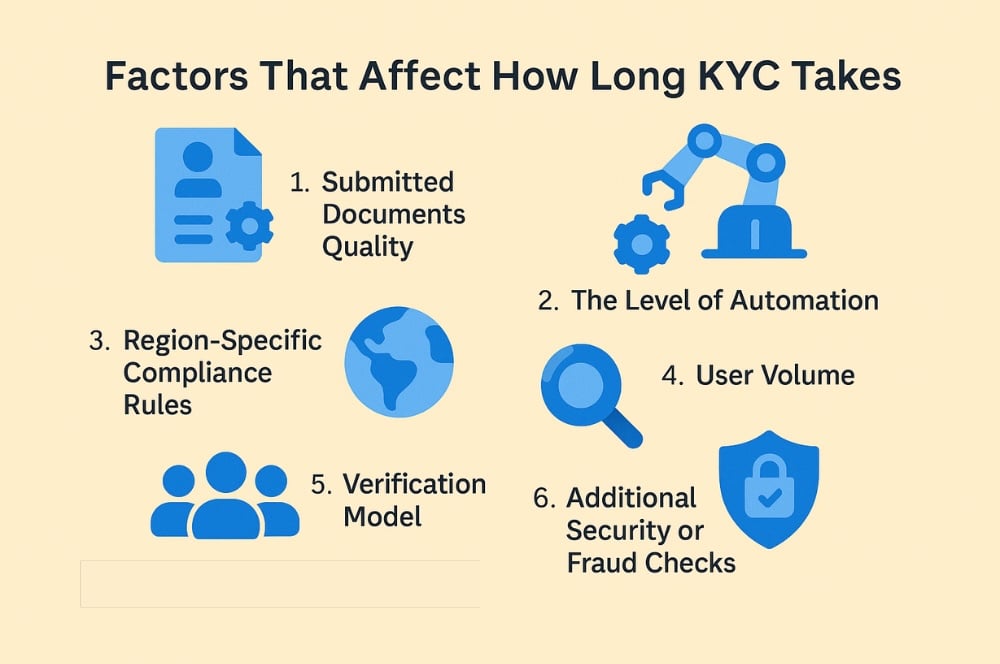
Υποβαλλόμενα έγγραφα Ποιότητα
Το σύστημα διαβάζει την ταυτότητά σας με τον ίδιο τρόπο που θα το έκανε ένας σαρωτής.
Όταν η εικόνα είναι καθαρή, ομοιόμορφα φωτισμένη και εμφανίζει όλες τις απαιτούμενες ακμές, το λογισμικό μπορεί να εξάγει και να επαληθεύσει τις λεπτομέρειες αμέσως.
Όταν η φωτογραφία είναι στραβή ή το κείμενο είναι ελαφρώς θολό, η πλατφόρμα πρέπει να εκτελέσει επιπλέον ελέγχους για να καταλάβει τι βλέπει.
2. Το επίπεδο αυτοματοποίησης
Ορισμένες εταιρείες επενδύουν σε ισχυρή αυτοματοποίηση, όπου οι περισσότερες υποθέσεις εγκρίνονται χωρίς να παρεμβαίνει κάποιος. Αυτά τα συστήματα τελειώνουν γρήγορα, επειδή είναι κατασκευασμένα για να μετακινούν τους χρήστες μέσω μιας προβλέψιμης ροής.
Άλλες πλατφόρμες λειτουργούν με ελάχιστη αυτοματοποίηση, πράγμα που σημαίνει ότι περισσότερα αρχεία καταλήγουν στην ουρά αναθεώρησης.
3. Κανόνες συμμόρφωσης ανά περιοχή
Κάθε περιοχή έχει διαφορετικά κριτήρια επαλήθευσης. Ορισμένες απαιτούν πρόσθετα στάδια ελέγχου, επιπλέον ελέγχους εγγράφων ή λεπτομερέστερη επικύρωση της ταυτότητας.
Αν και τα βήματα αυτά δεν είναι ορατά στο χρήστη, επηρεάζουν το χρονοδιάγραμμα.
4. Όγκος χρήστη
Τα συστήματα KYC δεν λειτουργούν μεμονωμένα. Ανταποκρίνονται στη ζήτηση. Όταν μια πλατφόρμα βλέπει αύξηση των νέων εγγραφών ή επιστρέφει πολλές υποβολές προς εξέταση ταυτόχρονα, οι χρόνοι αναμονής μεγαλώνουν.
5. Μοντέλο επαλήθευσης
Ο συγχρονισμός μετατοπίζεται περισσότερο εδώ. Ορισμένες πλατφόρμες επανεξετάζουν συνεχώς τις υποβολές KYC. Άλλες ακολουθούν προγραμματισμένους κύκλους.
Δίκτυο Pi εμπίπτει στη δεύτερη κατηγορία, γι' αυτό και έχω ακούσει τόσους πολλούς ανθρώπους να γκρινιάζουν πόσο καιρό διαρκεί η επαλήθευση KYC στο Pi.
Ο χρόνος επηρεάζεται από το ίδιο το χρονοδιάγραμμα της παρτίδας. Ακόμα και μια τέλεια υποβολή περιμένει μέχρι την επεξεργασία της επόμενης παρτίδας.
6. Πρόσθετοι έλεγχοι ασφάλειας ή απάτης
Ορισμένοι λογαριασμοί ενεργοποιούν βαθύτερους ελέγχους βάσει μοτίβων που εντοπίζει το σύστημα.
Η πλατφόρμα θέλει απλώς να επαληθεύσει ότι ο χρήστης δεν συνδέεται με προηγούμενες ύποπτες δραστηριότητες ή επανειλημμένες προσπάθειες εγγραφής.
Πώς διαφορετικές βιομηχανίες χειρίζονται τα χρονοδιαγράμματα KYC
Όπως είπα παραπάνω, ο χρόνος KYC μπορεί να αλλάξει ανάλογα με τον κλάδο. Επιτρέψτε μου να σας παρουσιάσω τον τρόπο με τον οποίο αντιμετωπίζεται σε διάφορους κλάδους.
Τραπεζικές υπηρεσίες
Οι παραδοσιακές τράπεζες χρειάζονται περισσότερο χρόνο. Ακόμη και για τους βασικούς λογαριασμούς, το KYC μπορεί να διαρκέσει αρκετές εργάσιμες ημέρες, επειδή πολλές ομάδες ελέγχουν τα έγγραφα χειροκίνητα.
Ακόμα και αν ανεβάσετε τα πάντα τέλεια, η διαδικασία θα διαρκέσει ημέρες λόγω των εσωτερικών αλυσίδων έγκρισης.
Fintech
Οι εφαρμογές fintech κινούνται συνήθως ταχύτερα. Οι περισσότερες βασίζονται σε αυτοματοποιημένη επαλήθευση ταυτότητας και λογισμικό αντιστοίχισης προσώπων. Σε πολλές περιπτώσεις, μπορείτε να λάβετε έγκριση σε λιγότερο από μία ώρα.
Ωστόσο, καθυστερήσεις μπορεί να προκύψουν όταν το σύστημα επισημαίνει ασυνέπειες, όταν οι κανονιστικές απαιτήσεις είναι αυστηρότερες για ορισμένους λογαριασμούς ή όταν οι χρήστες υποβάλλουν έγγραφα κακής ποιότητας.
Crypto
Σχεδόν όλοι όσοι γνωρίζω αναρωτιούνται πόσο καιρό διαρκεί η επαλήθευση KYC, επειδή οι πλατφόρμες κρυπτογράφησης είναι οι πιο μεταβλητές.
Ορισμένα ανταλλακτήρια εγκρίνουν λογαριασμούς σχεδόν αμέσως, ενώ άλλα λειτουργούν σε παρτίδες.
Οι πλατφόρμες που πρέπει να διαχειρίζονται μεγάλο όγκο ή ρυθμιζόμενα περιβάλλοντα δεν μπορούν να αντέξουν καθυστερήσεις που προκαλούνται από χειροκίνητη αναθεώρηση ή υποβολές κακής ποιότητας. Η TruthScan μπορεί να βοηθήσει εδώ.
Επικυρώνουν τις ταυτότητες πριν από την υποβολή, χειρίζονται αυτοματοποιημένους ελέγχους και παρέχουν πίνακες ελέγχου για να παρέχουν ορατότητα σε πραγματικό χρόνο στη ροή εργασιών.
Ακόμη και όταν οι διαδικασίες KYC είναι τεχνικά γρήγορες, μπορεί να υπάρξουν καθυστερήσεις εάν οι πλατφόρμες πρέπει να εξετάζουν χειροκίνητα ύποπτα έγγραφα ή να χειρίζονται λογαριασμούς υψηλού κινδύνου.
Αλλά μπορείτε να χρησιμοποιήσετε εργαλεία ανίχνευσης απάτης και κινδύνων προς όφελός σας.
Για παράδειγμα, TruthScan έχει σχεδιαστεί για εταιρείες στον τραπεζικό τομέα, τον κλάδο της χρηματοοικονομικής τεχνολογίας και της κρυπτογράφησης. Μπορεί να σας βοηθήσει να εντοπίσετε πιθανά προβλήματα σε μια εφαρμογή πριν αυτά γίνουν η αιτία μιας καθυστέρησης.
Πώς να κάνετε την επαλήθευση KYC ταχύτερη
Υπάρχουν πρακτικοί τρόποι για την επιτάχυνση της επαλήθευσης KYC.
Με βάση την εμπειρία μου, η πληρότητα των εγγράφων είναι κάτι που συμβάλλει περισσότερο. Θα πρέπει επίσης να γνωρίζετε τον τρόπο με τον οποίο η πλατφόρμα σας χειρίζεται το KYC.
Το επεξεργάζονται συνεχώς ή σε παρτίδες; Οι πληροφορίες αυτές θα σας βοηθήσουν να διαχειριστείτε τις προσδοκίες σας.
Επίσης, βεβαιωθείτε ότι όλα τα υποβληθέντα τα έγγραφα είναι ακριβή και ενημερωμένο.
Οι ληγμένες ταυτότητες και τα ξεπερασμένα αποδεικτικά διεύθυνσης μπορεί να μη φαίνονται σπουδαία, αλλά μπορεί να προκαλέσουν σημαντικές καθυστερήσεις.
Εάν κολλήσετε, παρόλο που έχετε κάνει τα πάντα σωστά, επικοινωνήστε με την ομάδα υποστήριξης της πλατφόρμας. Ορισμένες φορές, η καθυστέρηση οφείλεται απλώς σε δευτερεύοντα, επιδιορθώσιμα ζητήματα.
Η επικοινωνία μπορεί να βοηθήσει εσάς και την πλατφόρμα να επιλύσετε αυτά τα προβλήματα γρήγορα.
Συνήθεις λόγοι που το KYC κολλάει ή απορρίπτεται
Το KYC μπορεί μερικές φορές να καθυστερήσει χωρίς προφανή λόγο. Αυτό που δεν συνειδητοποιείτε είναι ότι μπορεί να κάνετε κάποια λάθη ‘πρωτάρηδων’ που προκαλούν την καθυστέρηση.
Ελλιπή ή εσφαλμένα έντυπα
Μικρά λάθη όπως ελλείποντα πεδία, τυπογραφικά λάθη ή εσφαλμένες λεπτομέρειες έχουν πολύ μεγαλύτερη σημασία από ό,τι νομίζουν μερικοί. Αυτά τα φαινομενικά ασήμαντα ζητήματα αναγκάζουν τις πλατφόρμες να επισημάνουν την υποβολή για χειροκίνητη αναθεώρηση.
Φωτογραφίες κακής ποιότητας
Οι πλατφόρμες πρέπει να διαβάσουν τα έγγραφα πριν εγκρίνουν την αίτησή σας. Η υποβολή θολών ταυτοτήτων ή εκτυφλωτικών selfies δεν θα βοηθήσει την περίπτωσή σας. Το μόνο που θα χρειαστεί περισσότερο χρόνο στους ανθρώπινους κριτές για να επαληθεύσουν τις φωτογραφίες.
Έγγραφα που έχουν λήξει ή ξεπεραστεί
Όπως αναφέρθηκε παραπάνω, έληξε/ψεύτικη ταυτότητα και η παλιά διεύθυνση μπορεί να προκαλέσουν παύση της επαλήθευσης. Και μέχρι να προσκομίσετε τα σωστά και τρέχοντα έγγραφα, η αίτησή σας δεν θα προχωρήσει.
Επικύρωση προ-σάρωσης της TruthScan μπορεί να επισημάνει σχεδόν όλα αυτά τα ζητήματα πριν φτάσουν σε έναν ανθρώπινο κριτή.
Μπορείτε να το χρησιμοποιήσετε για να αποκλείσετε τυχόν προβλήματα που μπορεί να προκαλέσουν εμπόδια στην εφαρμογή σας.
Αυτό ισχύει ειδικά για όσους αναρωτιούνται για τον χρόνο επαλήθευσης Bybit KYC πόσο καιρό διαρκεί;
Ο χρόνος αναμονής σε τέτοιες πλατφόρμες υψηλού όγκου μπορεί να μειωθεί σημαντικά, αν απλώς φροντίσετε για την αντιμετώπιση αυτών των σφαλμάτων.
Τελικές σκέψεις
Η επαλήθευση KYC είναι σίγουρα απρόβλεπτη. Αλλά μόλις το εξετάσετε προσεκτικά, θα συνειδητοποιήσετε ότι οι περισσότερες καθυστερήσεις προέρχονται από συγκεκριμένα, επιδιορθώσιμα ζητήματα.
Φυσικά, είναι λιγότερο πιθανό να τα παρατήσετε αν γνωρίζετε τι προκαλεί την καθυστέρηση.
Αλήθειεςμπορεί να και παρόμοια Εργαλεία AI για επιχειρήσεις μπορεί επίσης να σας βοηθήσει να εντοπίσετε τέτοια ζητήματα πριν καθυστερήσουν την αίτησή σας.
Δεν θα επιταχύνει ως δια μαγείας τη διαδικασία, αλλά θα διασφαλίσει ότι δεν θα καταλήξετε να κάνετε λάθη που θα μπορούσαν να αποφευχθούν εντελώς.