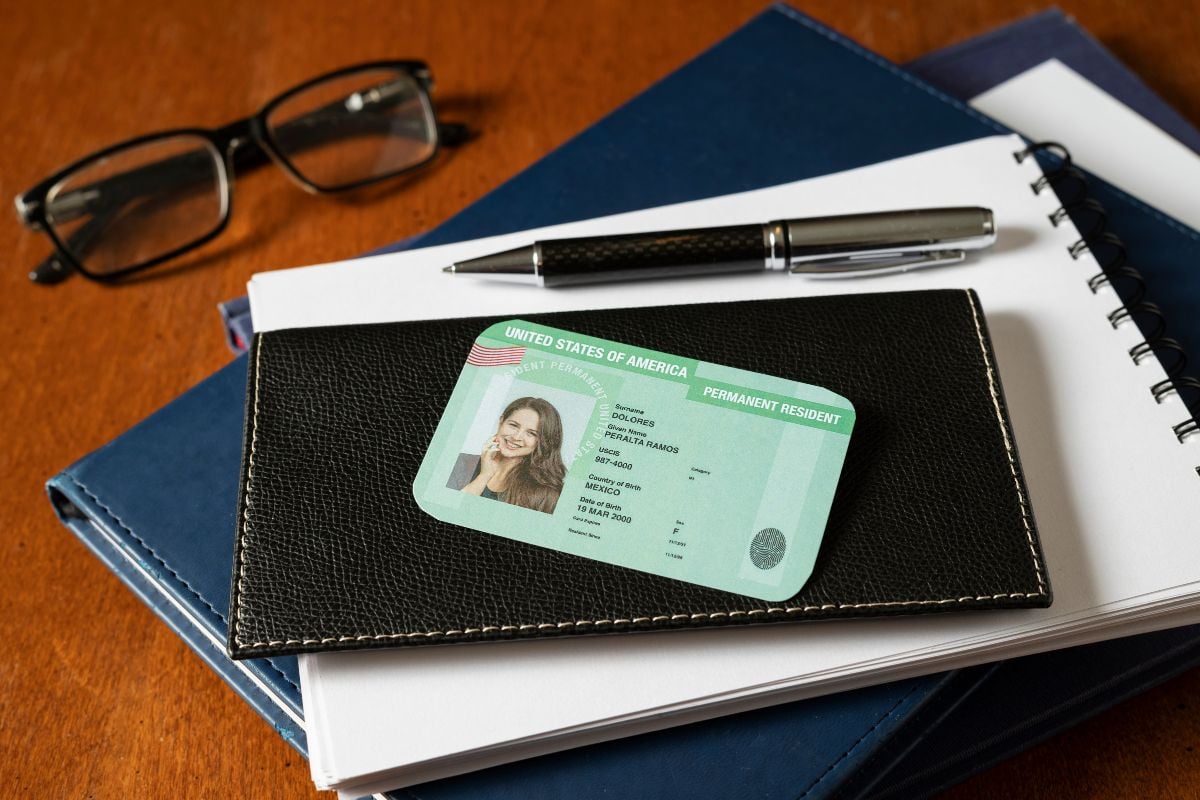
In 2026, the concept of trust has been forced to evolve from a human feeling into a technical requirement.
Your most experienced KYC analyst might spend ten minutes squinting at a high-fidelity document and see nothing wrong, while a specialized system can detect fake id images in under ten seconds.
We have reached a point where deepfakes are so efficient that spotting them with the naked eye is effectively impossible unless the creator makes an obvious mistake.
In this environment, fraudulent documents are being manufactured at an industrial scale. This surge leads to massive financial losses, regulatory penalties, and the creation of mule accounts that haunt a business for years.
The identity theft landscape has shifted because some websites now sell realistic AI-generated IDs for less than the price of a lunch. Just as people search for services such as do my homework for me online, fraudsters can now easily find AI-powered tools that generate convincing fake documents. Statistics from recent financial reports show that identity fraud attempts increased by over 40% in the last year alone, driven largely by the accessibility of generative tools.
When a fake document slips through your onboarding process, it places your company in direct violation of federal law. This can result in heavy fines or even the total loss of your license to operate.
To survive this, businesses must adopt deepfake detection systems that are at least as fast and clever as the tools used by the fraudsters.
Let’s dive in.
Key Takeaways
- TruthScan provides a forensic layer of protection by scanning every pixel of an ID for synthetic signatures that humans cannot see.
- Implementing specialized detection is no longer optional because AI-generated documents now perfectly mimic official security features and layouts.
- Digital footprints like manipulated EXIF data and inconsistent lighting remain the most reliable ways to flag a document before account creation is finished.
- A multi-layered defense strategy involving document analysis and biometric liveness checks is the only way to stop stolen or borrowed identities from entering your ecosystem.
What Are Fake ID Images
Identity documents have evolved from simple physical cards into complex digital files that fraudsters manipulate with surgical precision.
Understanding the different types of synthetic and altered documents is the first step in building a defense.
A fake ID is no longer just a poorly laminated card with a crooked photo. In the current era, these are sophisticated digital assets designed to bypass high-level security.


Never Worry About AI Fraud Again. TruthScan Can Help You:
- Detect AI generated images, text, voice, and video.
- Avoid major AI driven fraud.
- Protect your most sensitive enterprise assets.
One of the most common threats involves AI-generated identity documents. These are created from scratch using models that understand the specific patterns, fonts, and holographic placements of government-issued cards.
Because they are not copies of real IDs, they don’t trigger traditional “duplicate” flags in your database.
Beyond completely fake documents, we often see manipulated verification photos. This happens when a fraudster takes a legitimate ID and uses software to swap the face or change the birth year.
They might keep the original name and ID number to pass a basic background check, but the visual components are altered to match the person trying to open the account.
Finally, there are synthetic onboarding credentials. These involve a mix of real and fake data, such as a genuine social security number paired with an AI-generated face and a fabricated address.
These hybrid identities are particularly dangerous because they look like “clean” new customers to most automated systems.
Why Fraudsters Use Fake ID Images
Fraudsters rely on synthetic imagery because it provides a scalable, low-cost way to penetrate secure systems. By masking their true identity, they can commit a variety of crimes while leaving no trail back to their actual location or history.
Bypass KYC Verification
The primary goal for most criminals is to get past the Know Your Customer gate without revealing their true identity.
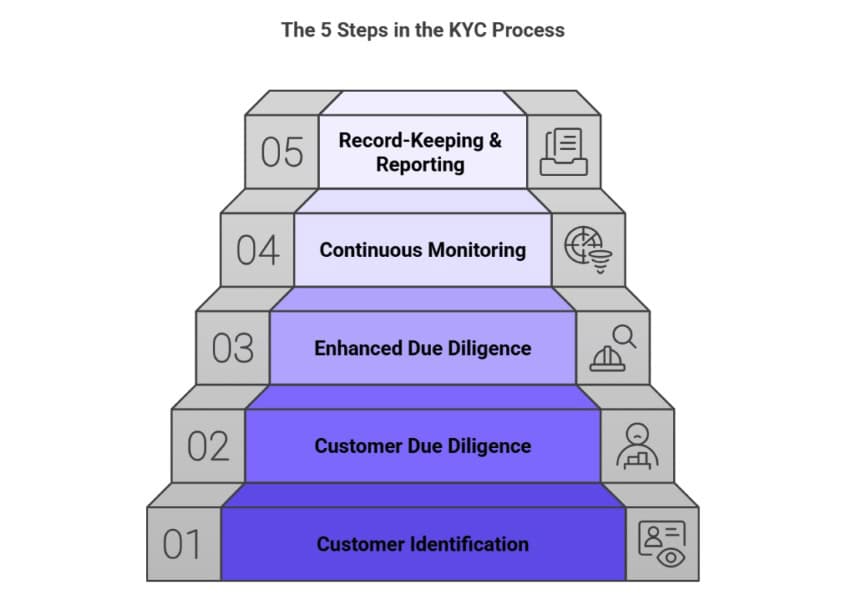
Source = Fraud
By using a fake ID, they can hide a criminal history or a previous ban from the platform. This is a standard tactic for people involved in financial crime prevention strategies who are trying to stay under the radar of federal investigators.
If they can pass the initial scan, they gain a foothold in your system that they can exploit for months.
Create Fraudulent Accounts
Once a fake ID is verified, the fraudster has a “clean” account. These accounts are often used as “mules” to move stolen money or to participate in coordinated attacks like bonus abuse or credit card “bust-out” schemes.
Having a verified status makes these accounts appear trustworthy, which delays detection by your internal security teams until the damage is already done.
Access Restricted Services
In sectors like gambling, liquor delivery, or cryptocurrency, age and location restrictions are strictly enforced. Fraudsters use edited IDs to appear older or to pretend they are living in a region where the service is legal.
This doesn’t just result in a lost sale; it can lead to massive regulatory fines for the business for failing to properly vet their users.
The risk is compounded by a profound “sophistication shift” in global fraud tactics.
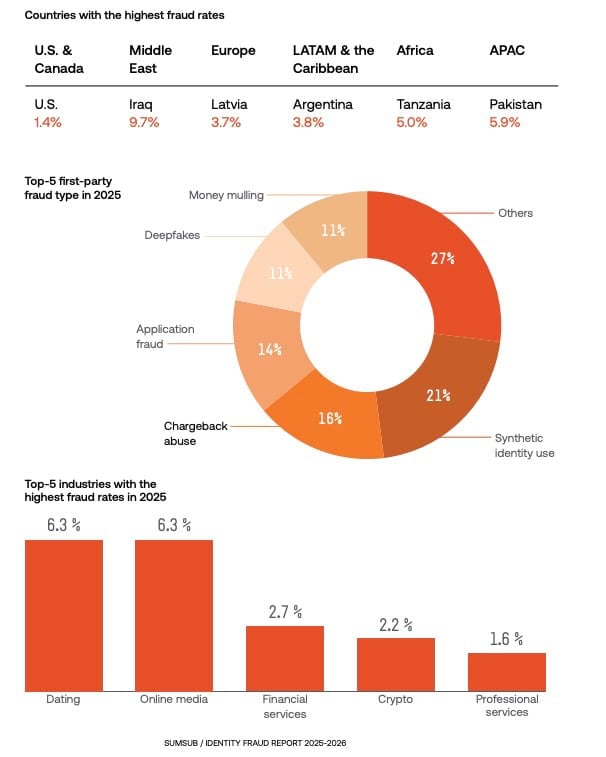
According to Sumsub’s 2025-2026 Identity Fraud Report, there has been a staggering 180% increase in sophisticated fraud compared to 2024, driven by AI-generated identities designed specifically to circumvent traditional verification systems (Sumsub, 2026).
This data underscores that fraudsters are no longer just guessing; they are using machine learning to replicate and test attacks with minimal cost.
How Fake IDs Bypass Verification Systems
Modern verification systems are often built to check data rather than visual authenticity, a weakness that scammers exploit.
They use a combination of digital editing and AI generation to create documents that “look” right to both humans and legacy software.
- Altered Facial Images Fraudsters use face-swapping tools to place their own likeness onto a stolen but valid document. Since the text data on the card is real, it passes a database check, while the visual check is fooled by the high-quality digital blend.
- Edited Personal Information Simple tools like Photoshop are used to change expiration dates or house numbers. If the resolution is kept low or if the lighting is matched perfectly, these edits are often missed by human reviewers who are rushing through a queue of hundreds of applicants.
- Synthetic Document Generation Modern generative AI can produce a unique ID that has never existed before. These documents follow the exact template of a state driver’s license or a national passport, including the correct barcode formats, making them nearly impossible to flag without pixel-level analysis.
Signs an ID Image May Be Fake
Identifying a fraudulent document requires looking at the small details that digital tools often struggle to replicate perfectly.
Here are the most common red flags that suggest an ID has been tampered with or generated by AI:
- Blurry Security Features On a real ID, holograms and micro-print are sharp. On a fake, these areas often look “mushy” or pixelated because they were added as a digital overlay rather than being part of the original physical card.
- Inconsistent Text Spacing When a fraudster edits a name or a date, the kerning—the space between letters—is often slightly off. If one word looks tighter or looser than the rest of the text on the document, it is a major red flag.
- Mismatched Facial Details AI-generated faces sometimes have “artifacts,” such as an ear that doesn’t match the other or a shadow that goes in the wrong direction compared to the rest of the image.
- Irregular Document Edges A digital image of a real ID usually has natural shadows and slightly rounded or worn corners. A fake created in a design program often has perfectly straight, sharp edges that look “too digital” to be a physical object sitting on a table.
The danger lies in how convincing these digital artifacts have become to the human eye.
Comparison: Physical Security vs. Digital Manipulation
| Feature | Authentic Physical ID | AI-Generated / Edited Fake |
| Tactile Elements | Micro-printing and raised text are physically embossed. | Appears flat; text often lacks the “sharpness” of physical printing. |
| Holograms | Shift colors and shapes naturally as the card is tilted. | Look static, “washed out,” or appear as a fixed, colorful overlay. |
| Edge Geometry | Corners show micro-wear or natural, slightly imperfect rounding. | Perfectly sharp 90-degree angles or mathematically perfect curves. |
| Light & Shadow | Shadows on the face match the ambient light of the environment. | “Floating” shadows or faces that are brighter than the background. |
| Optical Integrity | Consistent pixel grain throughout the entire image. | “Noise” or grain disappears around edited text or facial features. |
A sobering 2025 iProov study revealed that only 0.1% of participants were able to correctly identify every piece of fake media they were shown, effectively meaning that human-led verification is no longer a reliable defense. (iProov, 2025)
This research highlights that as generative AI moves mainstream, the only way to catch a deepfake is with a system that analyzes the image’s mathematical structure rather than its visual appearance.
How Enterprises Detect Fake ID Images
Large-scale businesses must move beyond simple visual inspections and adopt forensic technology to protect their platforms.
Here is how leading enterprises currently identify and block high-tech identity fraud at the source:
Image Classification Analysis
Enterprises use advanced models to categorize images based on millions of known examples of both real and fake documents.
This goes beyond looking for mistakes; it looks for the “mathematical signature” of the software used to create the image.
By comparing the noise patterns in a photo to known biometric security standards, the system can determine if a camera actually took the photo or if it was exported from a design suite.
Metadata Authenticity Checks
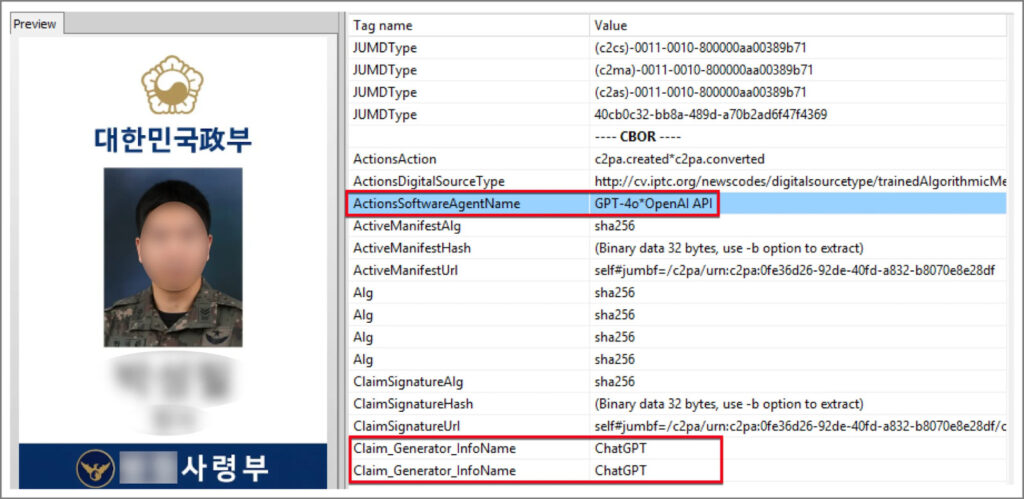
Every digital file has a history. A real photo taken during an onboarding session will have EXIF data showing the phone model, the timestamp, and the lens settings.
If a document is submitted with “stripped” metadata or shows it was last saved in a program like Adobe Illustrator, the system can automatically flag it for high-risk review before the user moves to the next step.
Facial Comparison Systems
This involves comparing the face on the ID to a live “selfie” taken during the signup process. If the ID photo is a high-resolution professional shot but the selfie is a grainy mobile photo, the AI looks for structural landmarks in the bone structure.
It ensures the person holding the phone is the same person on the card, stopping “borrowed” identity fraud in its tracks.
Behavioral Anomaly Detection
Fraudsters often behave differently than real customers. They might try to upload the same file multiple times or attempt to use different names with the same IP address.
By monitoring these identity theft patterns, businesses can spot a coordinated attack even if the individual documents look convincing.
AI Tools That Strengthen ID Verification
To combat AI-driven fraud, you need AI-driven defense. TruthScan provides a specialized toolkit designed to dissect every element of a submission to ensure its authenticity.
AI Image Detector: Identify Manipulated IDs
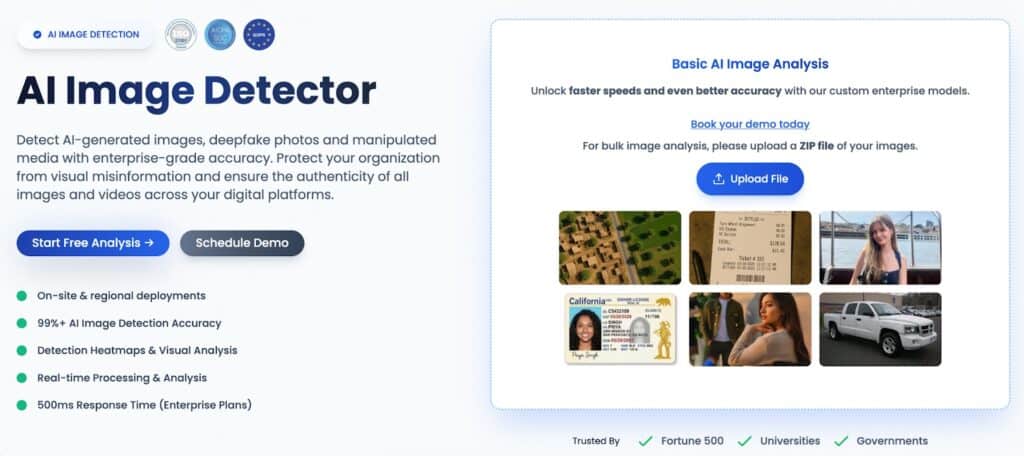
TruthScan’s AI Image Detector is built to scan the entire document, not just the face. It looks for color inconsistencies and texture patterns that indicate a document was generated by a computer.
This tool is especially effective against IDs made with the latest versions of DALL-E or Midjourney. Because it is trained on a massive dataset of synthetic images, it can spot the “digital fingerprints” that developers leave behind in their code.
The benefit for an enterprise is clear: you stop being a victim of “low-cost” fraud that uses basic AI tools to create accounts.
AI Text Detector: Detect Altered Information
Our tool focuses on the written data on the document. It checks if the fonts match the official state guidelines and looks for signs of “digital erasure” where a fraudster might have removed an old name to type in a new one.
It ensures that the information on the card is consistent and hasn’t been tampered with.
This protects the integrity of your KYC and AML compliance efforts by ensuring the data you are feeding into your background checks is actually what was printed on the original ID.
Deepfake Detector: Spot Synthetic Identity Photos
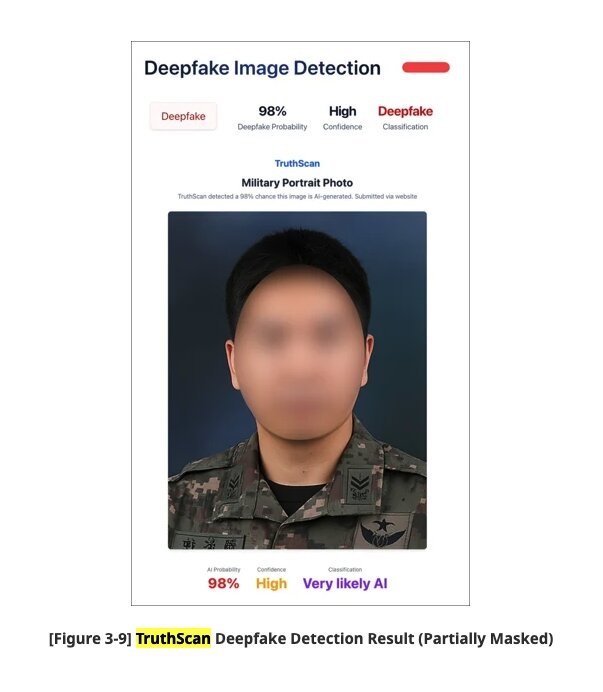
Our Deepfake Detector is a specialized tool designed to find face swaps and synthetic likenesses. It analyzes the skin texture and the way light interacts with the face in the photo.
If a fraudster has used a tool like FaceSwap to put their head on a stolen ID, this system will find the “halo” effect or the pixel mismatches at the edges of the face.
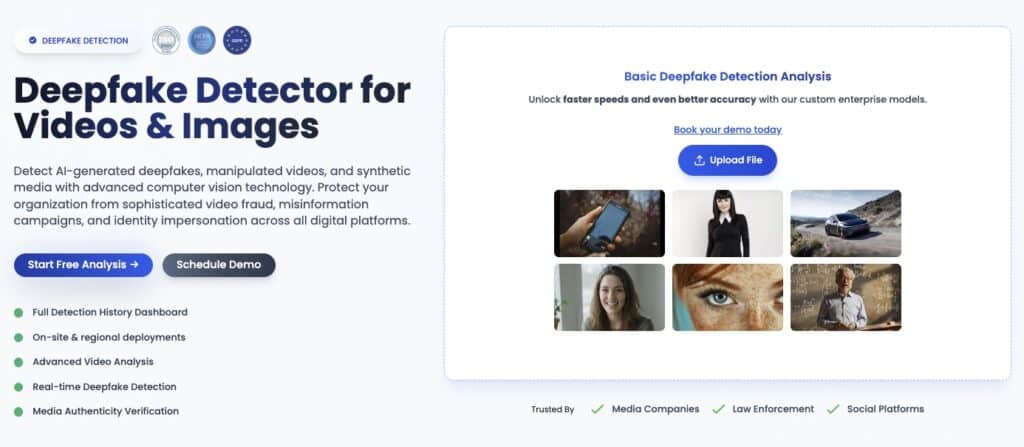
This provides a massive boost to security because it prevents criminals from using their own face to “verify” someone else’s stolen identity.
The Role of KYC Compliance in Fraud Prevention
Compliance is no longer just a legal obligation; it is a critical security layer.
By integrating forensic checks into your KYC workflow, you fulfill regulatory requirements while simultaneously hardening your system against attackers.
Stronger Onboarding Controls
KYC is not just a checkbox; it is the first line of defense for your business. By implementing strong controls at the very beginning, you discourage fraudsters from even trying to attack your platform.
When they see that you require a live liveness check and use forensic-grade ID scanning, they often move on to a weaker target. This keeps your user base “clean” and reduces the amount of work your security team has to do later.
Multi-layer Verification Workflows
A single check is never enough. The best identity verification systems use a combination of document analysis, biometric matching, and third-party data verification.
This “defense in depth” ensures that even if a fraudster manages to trick one part of the system, they will likely be caught by another.
For example, a fake ID might pass a visual check but fail when the metadata doesn’t match the device location.
Regulatory Compliance Readiness
Regulators are increasingly looking at how companies handle AI-driven fraud. Simply saying “we didn’t know it was a fake” is no longer an acceptable excuse.
Using tools that provide audit trails and forensic reports proves to regulators that you are taking proactive steps to follow the law.
This readiness protects you from the catastrophic fines that come with a major data breach or money laundering scandal.
Best Practices to Prevent Fake ID Fraud
Maintaining a secure platform requires a proactive approach that blends technology with smart operational habits.
Following these best practices will help ensure that your verification process remains resilient as fraud tactics evolve.
- Real-time verification checks Never allow users to upload pre-saved images. Use the device’s camera to capture the ID and the user’s face in real time to ensure the physical documents are present.
- Human and AI review While AI is faster, humans are still valuable for handling complex “gray area” cases. Use AI to filter out 99% of the noise, allowing your experts to focus on the truly suspicious 1%.
- Continuous fraud monitoring The check shouldn’t stop at onboarding. Monitor account activity for the first 30 days to see if the behavior matches the identity provided during signup.
- Cross-platform identity validation Check the user’s data against multiple sources, such as credit bureaus, utility records, and government databases, to ensure the person exists and lives where they claim.
How TruthScan Secures Identity Verification Workflows
TruthScan is an enterprise-level platform specifically designed to stay ahead of the curve in a world where AI creates fake identities every second.
By focusing on enterprise-scale ID analysis, TruthScan allows companies to process millions of users without slowing down the onboarding experience.
The system uses automated fraud detection to provide a “pass/fail” or “review” verdict in seconds, based on deep pixel analysis and digital fingerprinting.
This ensures real-time onboarding protection, meaning a fraudster is stopped before they can even see your platform’s dashboard. By integrating directly via API, TruthScan becomes a silent but powerful guard for your KYC process.
Talk to TruthScan About Preventing Fake ID Fraud
In an era where identity is easily manufactured, you need a partner that understands the technical nuances of synthetic fraud.
TruthScan helps you strengthen account verification by providing tools that see through even the most realistic deepfakes. This directly helps to reduce onboarding fraud and the massive costs associated with cleaning up after a security breach.
Most importantly, it allows you to protect customer trust, showing your legitimate users that you take their security and the integrity of your marketplace seriously.
Explore TruthScan to see how forensic AI can transform your identity verification from a vulnerability into a strength.