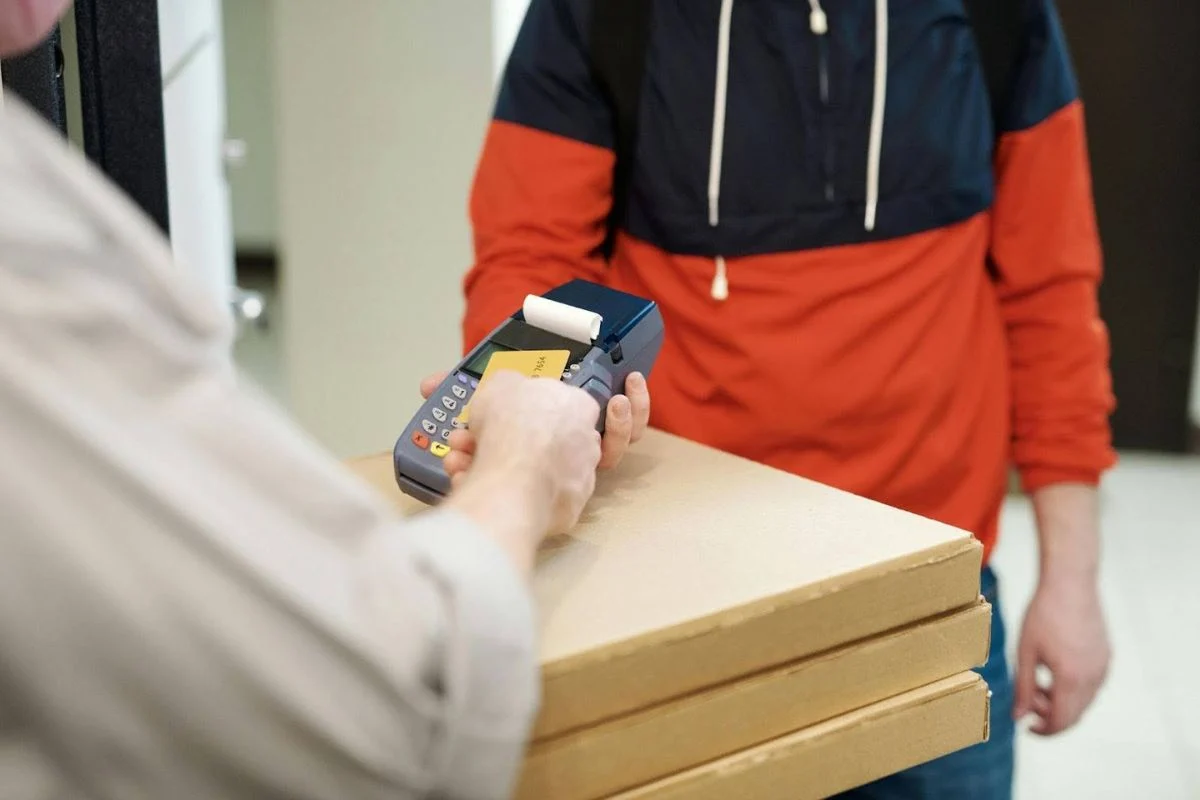
A customer orders some late-night burgers and fries through a food delivery platform. They then submit a refund claim by sending an image of the burger they ordered, with the patty supposedly still raw.
Your customer support sends the refund, only to find out later that the photo has been manipulated.
That’s a textbook case of AI image fraud. It’s a common way for deceiving customers to abuse their refund opportunities, and it affects many food businesses and delivery platforms worldwide.
There’s a way forward, and that’s through AI refund fraud detection. Like a fake receipt detector, the same technology that’s used to fabricate images can be used to spot them.
For businesses, fraud detection is a necessary solution to finally put a stop to those suspicious claims before refunds go out the door.
Let’s jump in.
Wichtigste Erkenntnisse
- Refund abuse in food delivery often involves customers using AI to manipulate photos—such as staging “raw” meat or “damaged” items—to receive free meals and credits.
- Manual review is insufficient for modern delivery platforms because it is too slow to catch real-time abuse and cannot consistently detect sophisticated AI-generated edits.
- AI image detection acts as a high-speed “digital forensic” layer, scanning for metadata inconsistencies, pixel distortions, and reused photos that human eyes often miss.
- Beyond individual claims, AI systems help identify coordinated fraud patterns and “tips” shared on social media, preventing small-scale exploits from turning into massive revenue leaks.
- TruthScan provides specialized refund abuse detection, offering real-time confidence scores and API integration to flag tampered receipts and product images instantly.
- By automating the first line of defense with Undetectable AI-driven tools, platforms can lower operational costs, protect their bottom line, and ensure legitimate customers receive faster support.
Understanding Refund Abuse in Food Delivery
From retail to banking, fraud affects every industry. And in food delivery, one of the biggest types of fraud that affects them is refund abuse.
It’s so bad that nearly half of consumer fraud on delivery apps involves refund-related schemes.
Refund abuse in food delivery happens when a customer exploits a platform’s refund systems to receive money or free meals they’re not entitled to.
Machen Sie sich nie wieder Sorgen über KI-Betrug. TruthScan Kann Ihnen helfen:
- Erkennen Sie AI-generierte Bilder, Text, Sprache und Video.
- Vermeiden Sie KI-gesteuerter Betrug in großem Umfang.
- Schützen Sie Ihre wichtigsten empfindlich Unternehmensvermögen.
Here’s how refund abuse happens:
- The customer places an order through a delivery app.
- They create a “problem” by staging a fake issue, such as claiming their food is undercooked, missing, damaged, or incorrect.
- They generate or manipulate the proof, using edited images, reused photos from other orders, or AI tools to create realistic visuals.
- They submit a refund claim with the image and a short complaint.
- They receive the refund or credit while enjoying perfectly cooked food and repeat the process on future orders.
What makes the refund problem more serious is how openly it’s being shared. Refund fraud tactics are even circulating on TikTok and Telegram, where some are exchanging tips to exploit refund policies.
For food delivery platforms and restaurant partners, this impacts nearly every aspect of the business, including hurting revenue potential and declining user trust. It’s a risk that leaders need to address directly.
Why Manual Review Falls Short
To catch refund abuse, many businesses (likely yours, too) still rely on manual review. This usually involves support agents checking flagged orders, reviewing customer histories, and looking at photos and claims.
Here are reasons why manual reviews struggle to keep up:
- Fails to get up to speed. Delays frustrate customers, which puts immense pressure on teams to approve refunds right away.
- Volume overwhelms teams. Large platforms generate more cases than support teams can reasonably process while staying consistent.
- Expensive to maintain. Staffing full-time review teams drives up operational costs, but they still can’t keep up with the speed of repeat refund abuse.
- Decisions vary by reviewer. Outcomes depend on individual judgment, and this leads to uneven enforcement and policy gaps.
- Patterns get missed. Humans struggle to connect repeated abuse across accounts, reused images, or coordinated activity.
While manual reviews are helpful for preventing food delivery fraud, this approach alone simply isn’t built for the scale businesses today demand.
Modern fraud prevention needs a system that’s scalable, operates in real time, and works alongside tested-and-proven manual processes.
How AI Image Fraud Detection Works
Businesses across sectors are turning to AI to fight fraud. If we look at banks as an example, around 90% of financial institutions use AI-based systems to detect fraud and protect their customers as threats grow more advanced.
Food delivery platforms are making similar efforts using refund abuse detection software, with AI image fraud detection as its core feature.
Instead of relying on surface-level checks, AI image fraud detection employs several methods to examine images and detect suspicious ones at scale:
- Visual pattern analysis: Systems scan for subtle distortions and anomalies that the human eye could miss.
- Trained classification models: AI is trained on large sets of real and fake images, which then allows it to compare new submissions against known manipulation patterns.
- Metadata verification: The system checks hidden data like timestamps and creation sources for inconsistencies that indicate an image has been tampered with.
- Edit and duplication detection: Algorithms identify repeated areas, splicing marks, and cut-and-paste artifacts that commonly appear in altered images.
It’s very technical, but the gist is that, when these methods are used together, AI systems can reliably review large volumes of visual data quickly and consistently.
Even better, these also serve as a fake receipt detector, making it easier to catch forged receipts.
Integrating AI Detection Into Food Delivery Workflows
Sound complicated? All this tech jargon might seem overwhelming, but making AI work for your business is more straightforward than you’d think.
Here are the steps to integrate AI detection into your food delivery workflow:
- Connect the AI tool via API: Link the AI system to your order and refund platform so images are analyzed as they come in.
- Set clear rules: Decide which risk scores (values that show how likely an image is to be fraudulent) trigger approval, require a review, or need further investigation.
- Automate scoring: Have the system evaluate each image for signs of manipulation and return results instantly.
- Route flagged claims: High-risk cases go to a review queue (manual reviews are helpful here) or trigger extra checks before a refund is issued.
As you can see, automated image fraud detection can seamlessly become a part of your refund process.
Benefits of Using AI to Prevent Refund Fraud
Refund fraud isn’t a minor inconvenience, as it could seriously hurt the business. A few years ago, retailers felt that pain firsthand when fraudulent returns and claims cost them $103 billion.
You need powerful tools to catch tons of manipulated claims quickly before they turn into real financial losses. AI detection gives you that capability.
These are the benefits of using AI to prevent refund fraud.
Real-Time Detection & Faster Resolution
AI reviews every uploaded image as soon as it’s been sent. Suspicious images are flagged immediately, so they’re moved to the side, and your support team can focus on legitimate requests.
This leads to faster resolutions. It’s a highly efficient process that doesn’t compromise the quality of service you provide to your customers.
Lower Losses & Operational Costs
Fraud drives up costs because of the manual labor required and lost revenue. AI chargeback protection stops manipulated claims before you shell out money. You also won’t need to hire large review teams, so you reduce overhead expenses.
Stronger Customer Trust & Platform Integrity
Customers lose confidence when they see a platform full of fraudulent cases, and especially when legitimate claims are delayed or rejected.
AI stops fraudulent activity before it spreads, and makes sure that all claims are handled fairly. This translates to a stronger brand reputation and more loyal customers.
Best Practices for Food Delivery Platforms
Food delivery platforms operate at scale, so the smallest gaps can become big risks without you realizing it. You’ll need an organized system and the right technology working together.
Take note of these best practices for supporting your business’s growth while protecting revenue and trust.
Ongoing Monitoring & System Updates
Food delivery businesses need to keep a close eye on what’s happening across orders, accounts, refunds, and user behavior.
That’s a handful, so set up a reliable system and make sure it’s up to date, especially as fraud tactics evolve and your platform continues to grow.
Continuous improvement (like reviewing incidents and adjusting your processes based on operational data) also keeps your controls effective and reduces long-term risk.
Employee Training & Awareness
Training helps your team use your tools effectively and recognize when something feels off.
Effective team training focuses on habits like:
- Training based on real incidents and not just using generic examples
- Having clear step-by-step rules for handling unusual activity
- Regular check-ins between support, operations, and tech teams
- Providing simple reporting channels for raising concerns
- Ongoing refreshers as systems and risks change
Together, employee training and building productive work habits reduce mistakes and slow down fraud before it spreads.
Aligned Policies & Efficient Processes
Aligned policies mean every team follows the same rules, standards, and procedures. A policy is only effective when no one’s confused about who does what or how decisions are made.
In turn, processes can flow with no friction from one step to another.
Businesses achieve this by standardizing their workflows through clear step-by-step procedures and role ownership, then reviewing those processes on a set schedule.
How TruthScan Detects Refund Image Fraud
Stopping fraud requires AI refund fraud detection you can trust.
Not every tool on the market is built for the level of risk a food delivery business encounters daily, and most can’t keep up with evolving schemes. TruthScan is built to handle that challenge.
TruthScan is an AI detection platform with AI image detection capabilities that can identify manipulated, synthetic, and fraudulent images with enterprise-grade accuracy.
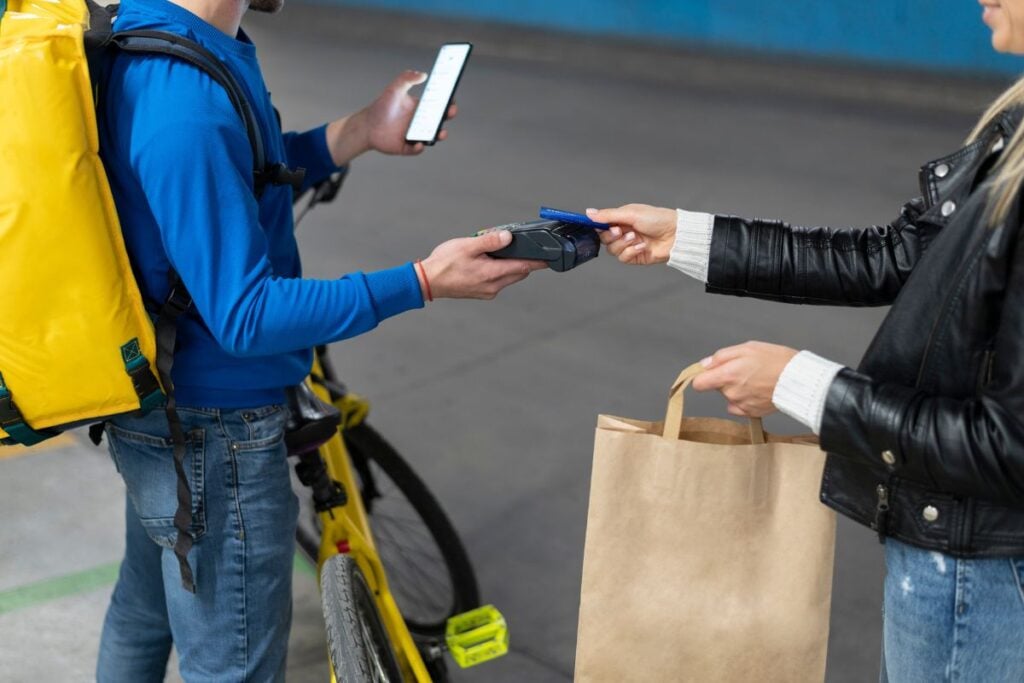
TruthScan’s AI-Bild-Detektor covers it all, acting as a fake receipt detector that catches tampered receipts and serving as refund abuse detection software that flags suspicious product images.
Here’s how TruthScan’s refund image fraud detection works:
- Catches AI-generated and altered images: Detects visuals created by AI tools or edits that the human eye might not catch.
- Scans images in real time: Images are checked instantly, even in high-volume workflows.
- Supports multiple formats: Works with photos from receipts, product images, and claims.
- Analyzes batches of images: Reviews large sets of images quickly through batch processing features.
- Provides confidence scores and metadata: Gives detailed reports that help guide your decision-making.
- Keeps up with new AI tools: Continuously adapts to detect images from emerging AI models.
TruthScan can also be integrated into your food delivery workflow, providing a comprehensive REST API for AI image and deepfake detection, with support for batch processing, real-time analysis, and webhook notifications.
With TruthScan, you protect your bottom line with powerful AI detection, strengthening your operations and building long-lasting trust across your platform.
Talk to TruthScan to Stop Refund Abuse With AI
Stopping refund abuse in food delivery now requires more than the standard manual check. AI image fraud detection catches manipulated receipts and product images in real time, reducing your losses and speeding up claim resolution.
TruthScan gives businesses a reliable way to automatically screen every claim, flag suspicious images, and integrate detection into their existing workflows. Protect your revenue, reduce review time, and maintain your platform’s credibility with tech you can trust.
See TruthScan in action. Contact us today to find out how AI can safeguard your food delivery business.