
It’s not surprising that businesses and brands with thousands of users get overwhelmed with images of invoices and receipts. Because they have to verify the authenticity before refunding or disbursing to their customers.
However, having to review each image manually is taxing, especially since some of these images have been generated by AI, fooling even the most detailed manual reviewers.
In a case where a dozen or more fake receipts pass through manual review, it could cost your company thousands.
So, what is the best solution for this? It’s an enterprise AI image detector.
Let’s get into the details below.
Det vigtigste at tage med
- Manual Image Review (MIR) creates massive operational bottlenecks because humans can only process a few hundred images per hour, whereas enterprises often deal with tens of thousands daily.
- Scaling manual teams is financially unsustainable due to high hiring and training costs, combined with the risk of “vigilance decrement” where human accuracy drops significantly after just 30 minutes.
- Relying on humans alone exposes companies to massive fraud, as sophisticated AI-generated deepfakes and fake receipts can easily fool even the most detailed manual reviewers.
- Failure to automate image moderation leads to serious business risks, including multi-million dollar regulatory fines, advertiser abandonment due to brand safety issues, and high employee burnout.
- TruthScan provides a scalable alternative by using AI to process images in under two seconds with a 99% accuracy rate, allowing enterprises to handle high-volume workflows without the lag of manual review.
- By integrating a high-performance tool like TruthScan, businesses can automate routine detection and save human expertise for the most complex edge cases and nuanced appeals.
What Is Manual Image Review in Enterprise Environments?
Manual Image Review (MIR) in enterprise settings is a human-led security process whereby human analysts evaluate visual assets against formal organizational policies, regulatory requirements, and risk tolerance levels.
Through this analysis, the reviewers can decide to do any of the following:
- Validate,
- Flag,
- Reject, or
- Escalate content.
In the case where manual image review is done, it primarily centers on filtering out inappropriate user-generated content, validating compliance, protecting brand integrity, and mitigating legal and reputational risk.
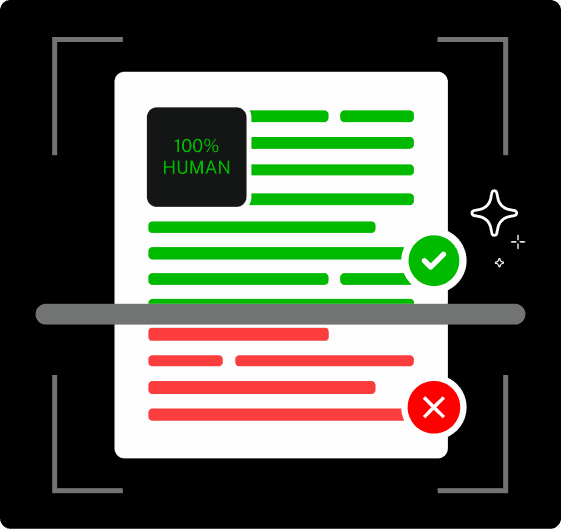
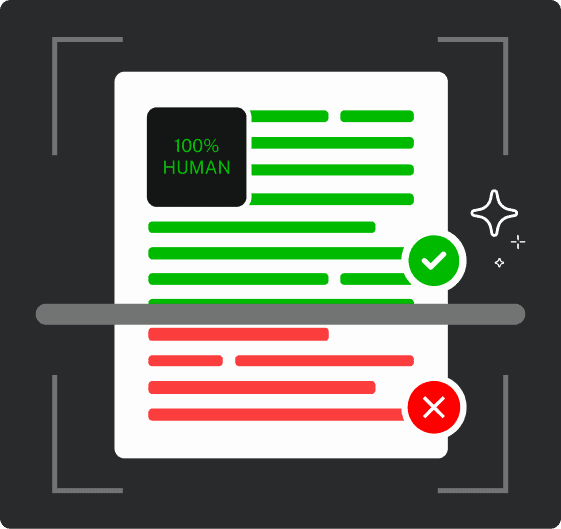
Du skal aldrig bekymre dig om AI-svindel igen. TruthScan Kan hjælpe dig:
- Opdag AI-generering billeder, tekst, stemme og video.
- Undgå at stor AI-drevet svindel.
- Beskyt dine mest følsom virksomhedsaktiver.
However, manual review creates bottlenecks, reducing your business’s efficiency thereby halting scaling efforts.
Why Manual Image Review Breaks Down at Scale
Manual image review is indispensable for high-stakes situations in enterprises that must carefully screen fraudulent receipts.
Unfortunately, the manual review is not built to scale as image processing volume increases. At this point, enterprises face an unsustainable bottleneck.
Then, a system that used to work for dozens of image reviews per week begins to fail catastrophically when teams need to review thousands of images daily.
This is what happens at scale:
- Human reviewers can only process about 100 to 300 images per hour, and that’s being generous. At enterprise scale, you get over 10,000 images every day. In that case, you’d need hundreds of full-time reviewers which will be an unsustainable operational burden. In fact, with fewer reviewers, your review queues grow faster than your team can handle, creating delays that can stretch from hours to days or even weeks.
- Training a new human reviewer takes weeks, and this adds to your overall cost when you have to hire, train and retain them.
- Human reviewers are not perfect and are prone to making mistakes. These mistakes increase as they get tired from being bombarded with hundreds of images daily. The same analyst may approve an image one day and reject a similar one the next. So, at scale, a reviewer’s fatigue will lead to inconsistent rulings and compliance drift.
- Although human touch is important for risky assessments, relying solely on humans can prevent your enterprise AI image detection system from capturing metadata and patterns that could train it better. This will lock you into costly manual dependency.
- On top of that, generative AI has made things worse for enterprises. Since 2023, AI-generated deepfakes have required much slower and careful review. Otherwise, it could cost thousands to millions of dollars, as seen with a finance employee in Arup’s Hong Kong office. This employee was tricked into transferring $25 million to fraudsters due to a video deepfake in 2024.
- Enterprises that have 50+ manual reviewers run the risk of coordination and agreement rates dropping among teams. At this point, you begin to consider policy drift as a major compliance risk.
Key Limitations of Manual Image Review

Undoubtedly, human reviewers are essential for understanding cultural nuance and context. Yet, we’ve noted that the sheer velocity of data upload, combined with the physiological limitations of the human brain cannot be scaled up.
This creates the following limitations for your enterprise:
- Inability to Scale with Volume
Generally, to review twice as many images, you need twice as many humans. This model breaks down under the weight of modern internet traffic.
Let’s take Instagram as a prime example. Its users alone upload over 95 million photos and videos per day. And when we look at YouTube, its creators also upload 500 hours of video every minute.
Based on this data, a team of 10,000 manual reviewers working nonstop can’t physically review every piece of content with 100% efficiency.
This has necessitated a reliance on post-moderation settings that allows harmful content to remain live for longer periods before it is addressed.
- Vigilance Decrement and Error Rates
Humans are evolutionarily ill-equipped for repetitive, high-speed manual visual scanning. Cognitive psychology even refers to this as the vigilance decrement.
This is a rapid decline in the ability to detect signals over time.
Furthermore, research indicates that a reviewer’s ability to accurately detect errors drops significantly after 15 to 30 minutes of continuous monitoring.
All this culminates into cognitive fatigue that reduces efficiency.
- Mental Health Impact
Facebook agreed to pay $52 million in a 2020 settlement to content moderators who developed PTSD while on the job.
This case is one out of many that has proven that manual reviewers, especially those who often view content that includes violence, child exploitation, and gore can face high burnout and psychological trauma that degrades their review quality and costs the enterprise money.
- Lack of Real-Time Response
Manual review at enterprise scale can’t work for real-time responses. The fault shows up by the time a human pulls an image from a queue to review.
By the time the human reaches a decision, the content may have already been viewed by thousands of users.
An example is the 2019 Christchurch attack that was livestreamed. The livestream video was viewed 4,000 times and reshared at a rate of one per second before it was taken down by the content moderation team.
Evidently, manual review queues simply cannot move fast enough to stop the virality of harmful and AI-generated images once they enter the ecosystem.
- Training and Expertise constraints
Many image-review domains depend on highly trained personnel. Training pipelines are long, and staffing shortages are common. In practice, making purely manual review hard to sustain at scale.
The Business and Compliance Risks of Relying on Manual Review
While the operational limitations of manual review create bottlenecks, manual review that fails to catch harmful content or catches it too slowly can lead to the following consequences:
Regulatoriske sanktioner
Governments are moving from self-regulation to strict legal frameworks for enterprises that deal with visual content.
For instance, under the European Union’s Digital Services Act (DSA), Very Large Online Platforms (VLOPs) face fines of up to 6% of their annual global turnover for failing to adequately tackle illegal content.
You can imagine that for a company the size of Meta, this represents billions of dollars. As a result, manual review is too slow and porous to guarantee the compliance levels required by new laws.
Brand Safety
A brand that can’t keep harmful images and content at bay faces challenges from advertisers as well. Advertisers are beginning to have zero tolerance for their brands appearing alongside NSFW, hateful, or AI slop.
According to a 2024 study by the Interactive Advertising Bureau (IAB) and Integral Ad Science (IAS), 51% of consumers are likely to stop using a brand that appears near objectionable content.
In light of this, manual review lacks the metadata and context capabilities to ensure great brand safety at scale. This can lead to immediate revenue loss when slip-ups occur.
Data Privacy Violations
Manual review also requires users to send their images, which can also often be private or sensitive images.
Sometimes, third-party Business Process Outsourcing (BPO) centers or internal employees have access to this raw user data. If not managed appropriately, human manual reviewers could become the source of a major data breach and privacy violations.
Unsustainable Profit
As your enterprise platform scales, you expect to earn more profit.
However, when the cost of manual review grows in lockstep with revenue or faster, this will prevent your company from achieving the profit that an AI image moderation platform usually provides.
User Migration and Community Toxicity
Gartner predicted that by 2025, 50% of companies will have to manage a “brand crisis” related to toxicity on their platforms, directly impacting user retention rates.
This has become increasingly so, with users on platforms like X and TikTok pushing for better community guideline enforcement.
This will drive up user apathy if enterprises keep relying on manual review, because review queues will get backed up and harmful content will stay online longer. This toxicity degrades the user experience, causing users to abandon the platform for safer competitors.
Why Enterprises Are Moving to Automated Image Moderation
For enterprise leaders, the move toward automated image risk detection is about survival.
When you’re dealing with millions of uploaded receipts as an e-commerce organization, you’ll need a fake receipt detector to keep things in check.
These are the reasons why enterprises are moving:
- AI provides deterministic consistency. If you feed the model the same image on Tuesday that you did on Monday, you get the same result. This stability is needed for enforcing clear community guidelines and maintaining advertiser trust.
- For categories with disturbing visual content like self-harm or violence, constant exposure can affect human reviewers. By automating the detection of obvious spam and violence, human moderators are freed from traumatic detection to handle complex appeals.
- Automated models process images in milliseconds. So, by integrating AI image detection, enterprises can offer real-time detection. This immediacy boosts user retention and conversion rates.
- Manual review is expensive at scale and eats into profits. However, with automation, enterprises can clear backlogs, do away with human fatigue, streamline image moderation for different locations and get a return on their investment easily.
- Automated moderation can generate structured logs, model scores, timestamps, reviewer overrides, and decision trails. That makes it far easier to support compliance, internal QA, and client reporting than relying on scattered manual notes.
What to Do Instead: A Scalable AI-Driven Approach
The alternative to the army of humans manually reviewing each image isn’t to remove humans entirely.
You have to view AI as a helper in the moderation process and utilize AI to handle the voluminous work. You can thereby reserve your human experts for nuanced cases.
Use Automated Image Analysis as the First Line of Defense
The most durable automated image systems don’t ask humans to look at everything. You can set the AI to handle high-volume and high-confidence decisions upfront.
A practical first line of defense looks like this:
- Run every image through automated classification at upload to detect key policy categories.
- Classify images based on confidence thresholds like auto-allow, auto-block, and escalate to human review.
- Use a human-in-the-loop workflow for edge cases and quality assurance.
- Feed reviewer outcomes back into training data and threshold tuning to improve performance over time.
- Treat moderation as an operational feature and not a one-off feature that you disable after a while.
- Add protections for evasion tactics that users can use to bypass the system. Also, always update your systems in cases of rapid policy change and better AI image generation products.
How TruthScan Solves Image Review at Enterprise Scale
Organizations today face an explosion of AI-generated and manipulated images from customer-submitted receipts and ID verification to social media content.
Manual review is impossible at such a scale, and the sophistication of AI image generators like DALL-E and Midjourney makes manual review unreliable.

TruthScan offers enterprises a way out with an accurate detection rate of 97.5% for Midjourney images and 96.71% of DALL-E images. Moreover, independent comparisons show a 99% correctness rate.
These results have bolstered TruthScan’s position as a comprehensive enterprise-grade AI image moderation platform that protects your organizations from sophisticated AI-generated threats.
These are the following ways it can help your enterprise at scale:
- TruthScan has a sub-2-second processing speed, which is critical for enterprises handling thousands to millions of images. The optimized detection pipeline processes images in seconds with enterprise-grade infrastructure.
- It supports bulk processing for high-volume workflows.
- The platform offers seamless integration, supporting automated workflows and custom implementations.
- This now allows organizations to embed image detection directly into existing content moderation pipelines and claims processing, etc.
- Each piece of content is assigned a confidence score from 0-100%, indicating the likelihood it was generated or manipulated by AI.
Talk to TruthScan About Scaling Image Review Safely
TruthScan is ready to work with you and scale your image detection smoothly. You can directly reach out to TruthScan on their platform to integrate their automation into your workflow.
Enterprises working with TruthScan get the following features:
- Large discounts for high volumes
- On-site & regional deployments (UK, EU, and other negotiated locations)
- Highest quality custom models
- Custom integrations
- 24/7 dedicated support
- Custom SLA
- Dedicated account manager
There’s no upfront cost; rather, you’ll negotiate your contract with a TruthScan sales agent, so you can get an arrangement that suits your business.
Additionally, you stand a chance to earn up to $100k in the Partner Program by using your connections to pitch TruthScan to brands that are attacked by deepfake and AI-manipulated content.