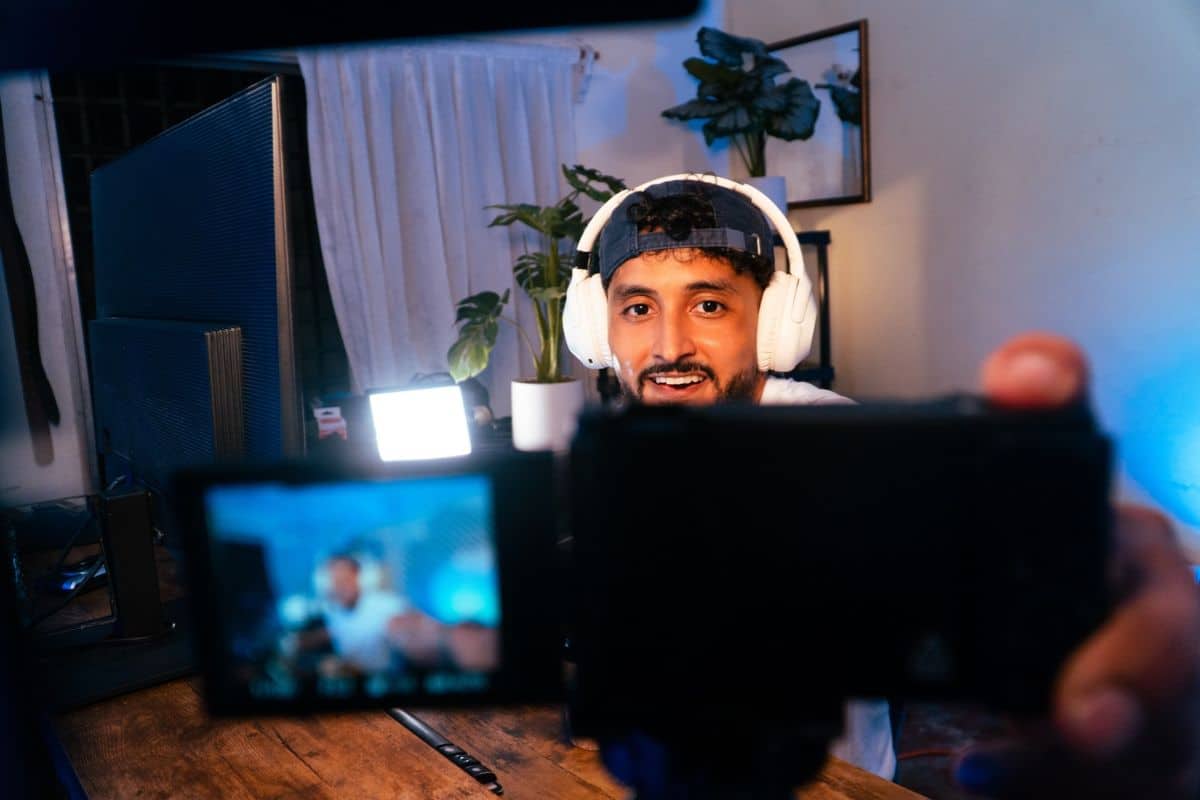
How long would a fake broadcast stay live on your platform before someone on your team pulled it?
On October 28, 2025, a YouTube channel calling itself NVIDIA Live streamed a deepfake of Jensen Huang pitching a crypto giveaway while the real GTC keynote was running. At one point it had almost 100,000 viewers, more than eight times the official stream, according to PCWorld’s report.
For part of that window, the fake outranked the real keynote in YouTube search, and viewers were asked to scan an on-screen QR code and send cryptocurrency. Everything that mattered happened while the stream was live.
Effective AI video detection for live streaming helps platforms identify deepfake broadcasts before viewers fall for scams and send their money.
That timing is what makes live streams different from uploads, and it changes how your detection has to work.
Key Takeaways
- Live deepfakes can spread scams within minutes, making real-time detection essential for streaming platforms.
- Combining video, audio, channel identity, timing, and audience behavior helps identify suspicious broadcasts.
- Risk-based sampling and rolling detection scores help balance detection accuracy with manageable processing costs.
- A clear escalation ladder with human review, reversible actions, and saved evidence helps prevent scams while protecting legitimate creators.
- TruthScan’s AI Video Detector analyzes synthetic media in real time, while its AI Text Detector helps flag scam messages in live chat.
Why Live Deepfakes Break Upload-Time Moderation
Most platform defenses were designed for files. YouTube’s likeness detection, opened to all users over 18 in May 2026, scans videos for faces that match people who’ve enrolled, and the impersonated person then asks for removal.
That helps public figures, though it depends on the right person enrolling, noticing and filing a request. A live stream can do its damage in the time that loop takes.
The tools on the other side are getting easier too. Deep-Live-Cam, an open-source project that swaps faces in real time from a single photo, picked up more than 1,600 GitHub stars in its first 24 hours in August 2024 and topped the trending list.


Never Worry About AI Fraud Again. TruthScan Can Help You:
- Detect AI generated images, text, voice, and video.
- Avoid major AI driven fraud.
- Protect your most sensitive enterprise assets.
| Question | Recorded upload | Live stream |
|---|---|---|
| When can you scan? | Before or right after publishing | Only while it’s airing, in short windows |
| Who usually reports it? | Rights holders and the impersonated person | Viewers, often after they’ve been scammed |
| Cost of a miss | Grows slowly as views add up | Peaks within minutes of going live |
| Cost of a false positive | A delayed upload and an appeal | A real creator cut off mid-show in front of an audience |
| Evidence afterward | The file itself | Only what you saved while it aired |
The Signals You Can Read During a Broadcast
Video analysis is the core signal, and it gets much sharper when you combine it with what the channel and the stream are doing.
| Signal type | What to watch | Why it helps |
|---|---|---|
| Video frames | Face swap artifacts, lip-sync drift, lighting that doesn’t match the room | Direct evidence the presenter is synthetic |
| Audio track | Cloned voice markers and speech that doesn’t match mouth movement | Catches fakes that use real footage with a cloned voice |
| Channel identity | A new or renamed channel using a famous brand or person’s name | Scam streams like the fake Nvidia keynote borrow a trusted identity |
| Timing | Going live during a real event, such as a keynote or earnings call | Attackers ride search traffic for the real event |
| Calls to action | QR codes, wallet addresses and “send to double” offers on screen or in chat | Shows the stream is built to collect money |
| Audience pattern | A sudden viewer spike on a channel with little history | Suggests promotion or manipulated ranking |
A Reference Setup for Real-Time Video Detection
You don’t have to analyze every frame of every stream. A sampling design keeps costs predictable while still catching a fake within the first minutes.
- Tap the ingest pipeline after transcoding and pull a lower-resolution rendition to keep compute light.
- Sample short clips of video and audio at a set interval for each stream you’ve marked for scanning.
- Send each clip to the detection API and receive a score, indicators and a heatmap through a webhook.
- Keep a rolling score per stream, so one noisy clip doesn’t trigger action by itself.
- Feed that rolling score and the channel signals into your policy engine.
- Save every scored clip with its result, so you have evidence once the stream ends.
Clip length matters more than people expect. Our models give more confident answers with ten seconds or more of steady footage, so windows of that length work better than single frames.
An Escalation Ladder for Mid-Stream Decisions
Cutting a stream is the most visible action you can take, so build steps that come before it. Each rung should be reversible until the evidence is strong.
| Situation | Action | Who reviews | What viewers see |
|---|---|---|---|
| Low rolling score, no risky signals | Keep sampling at the normal rate | Nobody | Nothing |
| Uncertain score, or a brand name used by a new channel | Sample more often and remove the stream from search and recommendations | Moderator queue, high priority | Stream stays up with less reach |
| High score with a QR code or wallet address on screen | Pause the stream behind a warning screen and keep recording | On-call moderator within minutes | A warning that the stream is under review |
| Confirmed impersonation | End the stream, suspend the channel, save the evidence and block re-uploads | Trust and safety lead | Stream removed |
Give real creators a fast appeal path. A false positive during a live show costs more goodwill than one during an upload, so every pause needs a human review queue with a short time target.
Decide Which Streams Get Scanned, and How Often
Scanning effort should follow risk. A gaming stream with a long-standing channel needs a lighter touch than a brand-new channel that goes live as “Official Keynote” ten minutes into a real one.
| Trigger | Suggested scanning |
|---|---|
| Channel name or thumbnail uses a verified brand or public figure | Continuous sampling from the first minute |
| A major real event is happening at the same time | Continuous sampling for any stream that matches the event’s keywords |
| QR code, wallet address or payment link appears | Immediate scan and priority review |
| New channel with a sudden viewer spike | Increased sampling until the spike settles |
| Established channel, no risk signals | Periodic spot checks |
The Rules That Now Reach Live Platforms
Since 2 August 2026, the EU AI Act requires deployers who publish deepfakes to disclose them, and Europe’s regulators read that duty widely for content posted online. If your platform hosts synthetic presenters, labeling has to work for live content too.
In the US, the TAKE IT DOWN Act has required covered platforms to remove nonconsensual intimate imagery, including AI-generated imagery, within 48 hours of a valid request since May 2026.
Clips cut from a live stream and re-uploaded fall under that clock, as WilmerHale explains, along with the duty to find identical copies.
How We Fit Into a Streaming Stack
Real-time video detection is a competitive space, and some vendors do focus on it seriously. Unite.AI’s reviewer described Reality Defender as heavily focused on real-time deepfake and impersonation detection, which is a fair strength to recognize.
We built TruthScan for platforms that need the video, the voice and the scam text around it judged together. Our AI Video Detector fuses frame, motion, audio and metadata signals in an ensemble built to keep false positives low.
Live and streaming endpoints, S3 and GCS ingestion, webhooks and batch jobs are all supported through our video detection API. Each result comes with a verdict, a confidence score, indicators such as lip-sync drift and JSON or PDF exports for your appeal records.
Our models recognize output from hundreds of generators, including Sora 2, Veo 3, Kling AI and HeyGen, and they handle footage up to 4K. Our AI Text Detector can score scam messages posted in chat during the same stream.
For platforms with strict data rules, we offer SSO and SAML, data residency, retention controls and on-prem or VPC deployment.
What an Independent Reviewer Found
In February 2026, Unite.AI published a hands-on TruthScan review that compared us with GPTZero, Reality Defender and Winston AI. The reviewer rated our accuracy at 96% to 99% across AI images, video and deepfakes.
In one test, an AI-generated headshot scored 97% likely fake and an authentic photo scored 2%, with both results back in under a second. The review named us the strongest option for fraud prevention and detection across multiple media types.
When We’re Not the Right Fit
If your main problem is reuploaded copyrighted footage, a fingerprint matching system such as Content ID is the right tool. We detect synthetic and manipulated media, and we don’t track who owns a piece of footage.
Very short clips are also harder for any detector. If most of your streams are a few seconds long, expect lower confidence per clip and lean more on channel and behavior signals.
Frequently Asked Questions
Can AI detect deepfakes in a live stream in real time?
Yes. We at TruthScan analyze sampled clips from live streams and video calls while they air, return scores through webhooks and let your policy engine act within minutes of a fake going live.
How much of each stream needs to be scanned?
Only enough to reach a confident score. Risk-based sampling, with continuous checks on high-risk streams and spot checks on established channels, keeps costs predictable.
What happens when a real creator gets flagged?
Use reversible steps first, such as reducing reach or showing a review screen, and send the case to a human moderator quickly. Keep the scored clips and heatmaps so the appeal can be decided on evidence.
Does detection work on low-quality mobile streams?
It does, with confidence improving on steadier and longer footage. Ten seconds or more of stable video gives the best results, and the audio track adds a second signal when the picture is poor.
Do Content Credentials solve deepfake streams?
They help prove that official streams are genuine. A scam stream simply won’t carry credentials, though, so you still need detection to judge streams that arrive without them.
Catch It While It’s Still Live
Pick the stream types with the highest risk, usually brand-name channels and anything aired during a big real event, and connect them to detection first. Add the escalation ladder, then widen coverage as your thresholds settle.
If you’d like to test detection against your own ingest pipeline, contact our team to scope a pilot.